Harlow’s Still Here
Fifty years ago, she was the queen of Philly nightlife, Jack Kelly’s girlfriend, and the city’s most famous transgender woman. Today, she’s ready to tell her story.
In the spring of 1972, an elegant woman wearing a white Halston jumpsuit and carrying a silver fox coat asked her driver to stop at the corner of Chestnut and Bank Streets in Old City.
A line of people extended around the corner and all the way up to the front door of the city’s hottest new nightclub. When they spotted her, they erupted into applause and started chanting her name.
With the kind of theatrical instincts only a former model and onetime drag queen could have, she sashayed down the alley dragging her fur coat behind her, past all the cheering would-be patrons and into the club that bore her name: Harlow’s.
It’s a name that has been spelled out in lights, emblazoned in headlines, and even plastered on billboards, announcing, and in some cases, denouncing the woman who danced with Sharon Tate at the Cannes Film Festival, dazzled Truman Capote (who named her one of the most beautiful women of the 20th century in Answered Prayers), acted with Jack Nicholson, and turned down Warhol.
Harlow was a transgender woman and a glamour bomb the likes of which Philadelphia had never seen — but the city always understood her as one of our own; “Marlene Dietrich by way of Broad and Tasker,” as one Inquirer profile put it in 1972.
Now, after living in privacy for years, Rachel Billebault, once known around the world as Harlow, is finally ready to tell her story.
“I always said ‘no,’ whenever someone contacted me,” she says. But when we reached out to her two years ago, asking if we could work with her to write her memoirs, she changed her mind.
“Time was running out,” she says. “There were too many things left unsaid. If not me, then who else?”
From the streets of South Philly, an icon is born
These days, the former queen of nightlife is known by her neighbors in the Greater Northeast as a sweet — and still quite beautiful — senior lady who mostly keeps to herself.
The only thing to indicate her former high-style life is her insistence on maintaining it.
“I’m always the best-dressed woman at the Acme,” she says.
As a teenager growing up on Juniper Street between Tasker and Morris in South Philadelphia, however, she would slip out the back door with just a light touch of lipstick on her face, love beads around her neck, her platinum blond hair lightly teased and coiffed. Walking down the alley behind her house, she’d make her way to the Broad Street Line to travel “into town” to meet her friends in Rittenhouse Square.
It was better that way. The neighbors sitting on their front steps wouldn’t see her leave and her parents, Joe and Rose Finocchio, wouldn’t have to explain her appearance. To everyone in the neighborhood, she was known by the male name she was given at birth, recognized by the boy clothes she’d been forced to wear her whole life, even if they whispered about her high voice and winsome mannerisms.
“A South Philly unicorn,” is how she remembers herself then. “A little fawn on two legs, just trying to get my feet under me.”
Her parents were remarkably accepting, although they constantly worried what the neighbors would think. There was the occasional slur, which always instantly got slapped down by her family or some protective wiseguys, but for the most part, the close-knit Italian American community left her alone.
To hear her tell it, half the families on the block had someone who was “a little bit that way.”
Rittenhouse Square had been a late-night gathering spot for discreet gay men going back to at least the 1930s, but by the early ‘60s, it had also become a haven for LGBTQ+ kids and the counterculture, who were each decidedly less discreet. She made lifelong friends there.
“They were the first people in my life who never asked me why my voice was so high or why my eyelashes were so long,” she recalled years later, her voice cracking in gratitude.
She was 18 on Halloween night 1966 when her cousin Billy all but forced her into entering her first drag pageant at the L&M Ballroom at 69th and Market. She won, and Harlow (named after the ’30s screen siren) was born.
Soon, she was entering — and winning — every drag contest in the city. Eventually, she made her way to New York, where she won the Miss Camp All America pageant in 1967, and was sent to Cannes to promote Frank Simon’s groundbreaking documentary about the pageant, The Queen. There, she dined with Capote and Orson Welles and danced with Tate in matching silver minidresses.
She spent a year in Hollywood. Director Henry Jaglom cast her in his 1971 film A Safe Place, starring Nicholson and Welles, which would make Harlow one of the earliest out transgender women to play a cisgender woman on film.
But when her onetime dance partner Tate was murdered, Harlow knew it was time to go.
“If they were killing girls like her, imagine what they’d do to a girl like me,” she says now.
A hometown hero returns
In 1971, she returned to Philadelphia, a city that loves nothing more than a hometown hero who comes back after conquering the world. That year, Philadelphia magazine ran a piece on her titled “Local Boy Makes Good,” detailing her exploits in Hollywood and glamorous run-ins with celebrities, along with a seven-page spread of Harlow modeling the latest women’s fashions around town.
To be transgender in the 1970s for most was to be invisible or under constant threat, although attitudes were generally less aggressive about it than the politicized atmosphere of today.
Coverage of trans people tended to skew toward a smirking sense of wonder or fear at the marvels of modern medicine.
Harlow had two tools at her disposal that she discovered early in her life and utilized for the rest of it.
“I was beautiful, if you don’t mind my saying, and no one could argue that I wasn’t a woman.”
She was thin, white, blond, and blue-eyed, which means she more or less embodied the beauty ideal of the early ‘70s, as seen in everything from Vogue covers to The Brady Bunch. And to be a trans woman perceived as naturally feminine in the traditional mode, to be able to live as a woman effortlessly without the fear of others’ reactions, lent her a privilege that made her path an easier one than many trans women were facing at the time.
“I could have gone anywhere and lived my life without anyone knowing my story,” she says. “But I stayed in Philadelphia and told it to anyone who would listen.”
That meant she suffered from being misgendered and deadnamed in the press, and being the target of headlines (some recounted in this article) that would seem jarring and offensive today — but it also meant she was elevated as a leading light of the city rather than as a curiosity or worse, a freak. For the rest of her time in the public eye, she would model for fashion spreads in local media like The Inquirer, alongside Main Line socialites, anchorwomen, and politicians’ wives.
At only 21, she became a fixture in the early ‘70s nightlife scene, bouncing back and forth between the bars and clubs of Center City and the inns and lounges of New Hope, causing a commotion everywhere she went.
“I can’t emphasize what it did for business, because when she would walk through that restaurant, conversations stopped,” said Ron Dubree, a friend from her Rittenhouse Square days, who owned the Mountainside Inn in New Hope. “I mean, people would turn and look. She was that stunning.”
Was it common for trans women to go out to mainstream establishments at the time?
“It wasn’t common for transsexuals to go anywhere at the time,” she asserts. “But I went into those places because I had no fear about being accepted.”
One night while standing in line with several girlfriends outside a club in Center City, she was approached by the club’s owner, a man named Stanley “Bo” Rosenbleeth.
“The first thing Bo said was, ‘You should never wait in line in your life,’” she recalls. When she left a couple of hours later, Rosenbleeth pressed his card into her hand: “Your name should be in lights,” she remembers him saying.
Rosenbleeth, who died in 2017, had opened a string of successful restaurants and clubs throughout Center City: everything from a banjo bar to a 1920s gangster-themed restaurant that staged fake shootouts. Sensing the coming trends, he was looking to open the best discotheque Philadelphia had ever seen.
He knew he could build a nightlife brand entirely around Harlow.
As he put it to The Inquirer in 1972, “I saw her as a person other people respond to.”
The birth of Harlow’s
Rosenbleeth picked a spot on Bank Street in Old City, in the block between Second and Third and Market and Chestnut. It was a savvy choice for a lot of reasons, not least being the nascent restaurant renaissance that would come to define Philadelphia in the 1970s. The Middle East, La Truffe, H.A. Winston, and other highly popular restaurants had opened in the previous few years in the neighborhood.
It would also turn out to be a smart choice because of its proximity to what was then the KYW-TV studios at Fifth and Market Streets, where Mike Douglas was hosting a constant string of world-class celebrities five days a week.
“Harlow the Hollywood He-She is Coming!” is how The Inquirer first reported plans for the soon-to-be-opened club in January 1972. When Harlow’s opened in March, it was an instant hit, prompting breathless coverage in the city’s society and scene columns, at a time when Philadelphia had enough daily and weekly newspapers to support over a dozen full-time columnists, documenting the movements and drama of the city’s celebrity circuit.
Harlow’s suddenly became the place to be seen by all of the people most interested in being seen.
“We had city councilmen, news anchors, socialites, drag queens, and mafiosos all on the same dance floor and they were all there, goofing on me,” she remembers, using a ’60s slang term to convey that she was the center of attention.
The club was three stories of dancing, drinking, and mingling spaces done up in a mid-century futuristic style that took its inspiration from A Clockwork Orange, all mirrors and modular furniture.
The Sunday Bulletin made it sound deliciously like Sodom and Gomorrah with a cover charge. “The orange ceiling lights barely cut through the smoke. In their hot mists, the bodies twist and writhe as if on an invisible griddle. And the music — The Rolling Stones are blasting their ‘Sympathy for the Devil’ — crashes into your ears at 110 decibels.
“And there’s no doubt who’s the high priestess of this orgiastic bell-bottom cult. Harlow. A head like Queen Nefertiti, ashen mane tossing in the lights … half-mannequin and half-deer.”
Every night, Rachel would ascend the spiral staircase in front of the entire club, usually in her signature white, which stood out like a beacon in the club’s lighting.
“Everybody wanted to have a drink with me. Everybody wanted to talk with me. Everybody wanted to dance with me. It was fabulous, but it was exhausting,” she remembers.
Philadelphia was going through a cultural renaissance in the 1970s. The Bicentennial was on the horizon and the city had star-spangled itself from one end to the next in preparation. Super producers Kenny Gamble and Leon Huff were defining R&B music through their Philadelphia International Records label, in the period between the dominance of Motown and the explosion of the disco era. Entertainment venues like the Latin Casino in Cherry Hill or the Valley Forge Music Fair brought a steady string of world-class celebrities through town, and Mike Douglas was more than happy to host them and any other superstars he could book.
Elton John would have a hit singing about “Philadelphia Freedom” and an obscure actor named Sylvester Stallone was about to make the steps of the Art Museum as iconic as the Eiffel Tower.
And every celebrity who ever spent a night in Philadelphia in the early ‘70s partied at Harlow’s.
“Truman [Capote] came to the club at least a half-dozen times. He and Halston would come in from New York just to see me and cause a little trouble,” she says now. “God only knows what they got up to after hours.”
Her duties as the hostess of the club that bore her name were only vaguely defined, but they all amounted to “Just be Harlow in the most public way possible.”
“Part of what Bo wanted me to do was be a woman around town. He believed in spreading the wealth, so people might see me at La Panetière or Jeanine et Janine having dinner and it made everybody want to go to Harlow’s. So I was out and about a lot. And then after leaving Harlow’s I would go to one of the after-hour gay bars. What can I say? I was living a life.”
Joe Greco was an old Rittenhouse Square pal who featured her in ads for his Society Hill salon Scissors Edge. “Whenever she walked into my salon,” he recalled, “The whole place would go dead silent. Whenever she walked out, half the women asked for her cut.”
Her stylish wardrobe was supplied through an allowance from Rosenbleeth and old Rittenhouse Square connections with a phalanx of gay men who ran the city’s many chic boutiques and department stores. She modeled clothes on the main floor of Wanamakers, an influencer 40 years before the word was coined.
“I couldn’t even go into Bonwit Teller without lines forming in those days!” she says of the fervor. “People would wait outside to get a look at me in the light, wondering, ‘Could it be possible?’ Well it was — and I was.”
A highly publicized procedure
One day, when they were still in the planning stages of the club, Rosenbleeth picked her up in his car and presented Harlow with a silver fox coat, a briefcase with $10,000 in cash inside, and a card with a stork on the front that read “Congratulations! It’s a girl!”
She finally had the money to complete her transition, something she’d been dreaming of since the day she was 16 and standing in her parents’ living room, clutching a copy of a magazine featuring 1950s transgender pioneer Christine Jorgensen and telling them “This is me.”
Harlow threw her arms around Bo and wept.
At a time when most transgender women were being forced into the margins of society, considered unemployable, and often had difficulty finding places to live, Harlow’s gender confirmation surgery was announced in the papers; not as something freakish but as the latest news about one of the city’s most prominent people.
“Harlow, this city’s resident movie and nightclub personality, has undergone a sex change,” the Philadelphia Daily News reported in June of 1972. The article, titled “Harlow ‘Couldn’t Be Happier’ At Sex Change,” goes on.
“‘It costs $3500,’ she said, ‘But it’s worth $35 million.’ The operation that transformed Harlow from a Mr. to a Ms. was performed two weeks ago at Yonkers Professional Hospital in New York. ‘I went in on a Monday and they operated on Tuesday,’ said Harlow, who was in the hospital eight days. ‘I was a little frightened,” she admitted, ‘But it really wasn’t that painful. All I had was discomfort. I’m still a little sore,’ she said, ‘But I feel fine now. I’m just a little weak.’”
She was still legally known by her given name and put her South Philly connections to work. “My family had a friend in the neighborhood who was a judge and he took care of my name change and getting my birth certificate changed to reflect my gender,” she recalls.
To her friends, family, and the Commonwealth of Pennsylvania, she was now Rachel Finocchio. But the press never stopped referring to her as Harlow, and for two decades, Rachel said yes to any talk show, from national to local, that invited her on to explain her existence.
Within a city that prizes authenticity, she says, her frankness was rewarded.
Never had anybody confronting me in my club or saying, ‘How dare you?’ or ‘You’re an abomination.’ Nothing.
“Never an unkind word. Never a problem. Never had anybody confronting me in my club or saying, ‘How dare you?’ or ‘You’re an abomination.’ Nothing,” she says now.
Still, she was frequently asked intrusive questions about her anatomy or dumb ones about whether her surgery hurt. In the club, she tried to avoid slow dances with patrons because it was obvious some of them were trying to determine whether they “believed” her.
She recalls that one of the club’s vendors demanded a dance on opening night and held her so tightly “he was practically behind me.” Afterward, he sat down and said loudly to his wife, “There’s no [expletive] way that’s a guy.”
When Harlow met Jack
One night, when Harlow was wearing a backless Halston gown, she felt someone touch the small of her back. It was Councilman-at-Large John B. Kelly Jr.
Jack Kelly was the city’s golden boy; the handsome scion of the Kelly family, an Olympic bronze medalist whose father was a gold medalist and the founder of Kelly For Brickwork, and whose sister Grace was a movie star and a bona fide princess. Kelly frequented Harlow’s semiregularly.
“I would see him there, but we never spoke to each other, just nodded from across the room. Believe me, I noticed him every time. Oh, God. That jawline?”
Their meeting remains vivid in her memory:
“Hello, Rachel,” she remembers Kelly saying. “Hello, Jack,” she responded, in the manner of two well-known people who don’t actually know each other. When he asked her to dance, she said, “Oh, no, Jack. I don’t think that’s a good idea at all. What will all these people think?”
But to hear Harlow tell it, Kelly didn’t care. He whisked her off to the dance floor in front of hundreds of people as an upbeat song played. “I never would have gone out there if it had been a slow song,” she recalls.
Rosenbleeth, looking out over a room full of attention-seekers, gossips, and media personalities, knew a good story when he saw one and immediately signaled to the DJ to play a slower song: “Me and Mrs. Jones” by Billy Paul. As the opening notes of the latest from the Gamble and Huff studio pealed out over the crowd, Rachel panicked, but Kelly took charge.
He pulled me closer, and he was a very strong man, let me say. He held the small of my back. So firmly, not tight, not like a grasp, but … I had never felt anything like that in my life.
“He pulled me closer, and he was a very strong man, let me say. He held the small of my back. So firmly, not tight, not like a grasp, but … I had never felt anything like that in my life,” she says now, her breath catching.
“I can also tell you that when we slow-danced to that song, the dance floor cleared out. We had it all to ourselves. It was spectacular.”
She grows wistful when she speaks of him, sometimes unable to finish the thought because the emotions overwhelm. “His breath, on my neck … Unbelievable.”
They bonded over their identity struggles, hers as a trans woman and his as the son of a prominent father and the brother of the ultimate overachieving sister. For their first date, he took her to a popular restaurant in Narberth called Gatsby’s, where he had recently been crowned “Lord Chamberlain of the Gatsby Redcoats,” a sort of Main Line version of the Shriners. He made the rounds, eagerly introducing her to friends and colleagues while he worked the room.
“After we sat down, he held my hand, and said to me ‘Rachel, look how everyone loves you. Look at all you’ve done. Everybody respects you.’ And then he said something that told me everything about him: ‘I, on the other hand, have always been Grace Kelly’s brother or John Kelly’s son.’ He loved that I was a success in my own life; that I had done what I wanted instead of what people expected,” she says.
Rachel had avoided sex for as long as she could, but she knew she’d finally met the man who was going to help her cross that threshold. She was only six months post surgery and had frantic visions of her hard-fought body reacting to the stress of sex like a windup clock in a cartoon. “It sounds silly, but I kept picturing springs and screws popping out!” She laughs now, but it was a genuine fear for the young woman; an unfounded one, as it turns out.
She recounts that Kelly was patient and so tender, she still cries softly talking about it decades later. “You can’t imagine what it meant to me,” she says through tears.
He squired her all over the city to fundraisers at the Union League, Eagles games at the Vet, and dinner parties with the city’s leading citizens. Her nervousness each time was met with the realization that they were all excited to meet her. “It was hard to escape the impression that he loved showing me off.”
On her 24th birthday, The Inquirer reported on a party at the club in her honor.
“Many came bearing gifts, but Harlow said her favorite present was a diamond ring from a guy whose identity she concealed.“
Today she reveals, “Everyone knew it was from Jack, but I didn’t think it was a good idea to brag about it.”
I said, ‘Oh Jack, is this a brother and sister competition? She marries the prince and you want to marry a queen?’ And the smile that came on his face.
“When he gave me the ring, I said, ‘Jack … a ring box? What is this? I’m afraid to open it.’ And I opened it and, I mean, come on, the man’s giving you a diamond ring. I said, ‘Oh Jack, is this a brother and sister competition? She marries the prince and you want to marry a queen?’ And the smile that came on his face. He just hugged me, and I said, ‘Thank you very much for the gift’ and that was that.”
Harlow and Kelly were happy, and to hear her tell it, in love, but beauty, charm, and influence were shields for her for only so long. There were limits to how much certain people could accept.
Kelly had plans to challenge Mayor Frank Rizzo in the forthcoming election, and Rizzo wasn’t going down without a fight. “If Jack lands the official nod, the “Citizens to Re-Elect the Mayor” already have a billboard campaign planned. The signs will read: “Do We Really Need Rachel Harlow as a First Lady?” said the Philadelphia Daily News on Jan. 27, 1975.
At the same time, The Inquirer reported that Jack’s mother Margaret Kelly made inquiries about Rachel to friends and threatened to permanently withhold donations to the party if Democratic leaders showed her son any support. There were rumors that she threatened to disinherit her son if he continued on his present course.
“Jack called it the ultimate betrayal,” Rachel remembers.
Amid all that stress, the relationship ended. “It was lovely and then we just went our separate ways,” she sums up simply, even as she acknowledges him as one of her great loves.
When pressed, she simply says: “Listen, in this life, you have to learn to let go of things.”
Out of the spotlight
In 1975, tired of all the feverish scrutiny, she walked out of Harlow’s for good. “There always comes a time with me where I have to retreat to my solitude, draw the curtains and just be with myself,” is how she explains it.
“Transsexuality is a solitary life. You have to come to the truth of who you are on your own, you have to stand up on your own and say it out loud, you have to go through that physical process, and you have to withstand the judgment of others. If you’re not right with yourself, you’ll never survive.”
You have to come to the truth of who you are on your own, you have to stand up on your own ... If you’re not right with yourself, you’ll never survive.
There were other nightclubs that bore her name after that and there were other love stories, many of which continued to make the papers. She preferred to date men from the area because she never had to have an uncomfortable conversation with anyone about her story. “They all dated me knowing exactly who I was.”
In 1980, she met a courtly French pastry chef named Gerard Billebault; they married in 1981. For a decade she enjoyed a quiet home life hosting their friends and being a stepmother. She returned to the spotlight when she and her husband opened a million-dollar supper club, Harlow’s at The Bourse, in 1989.
But running it proved prohibitively expensive and the strain of a public life caused them to eventually separate. She withdrew from the spotlight permanently in the early ‘90s and returned to the Juniper Street house to take care of her ailing mother after a stroke.
“I got tired of answering the same questions over and over again,” she says now. “I don’t think anyone should be in the public eye forever.”
Happily ever Harlow
Rachel now lives in a little house on a quiet street in Northeast Philadelphia, where she’s mostly kept to herself.
There is little left to indicate the dazzling life she once led. The Halston gowns, the silver fox fur, the hundreds of pairs of shoes, even the drag pageant crowns, they’ve all been given away. She gave the ring back to Kelly before they parted, despite his insistence that she keep it. Her old club is now a youth hostel, which delights her.
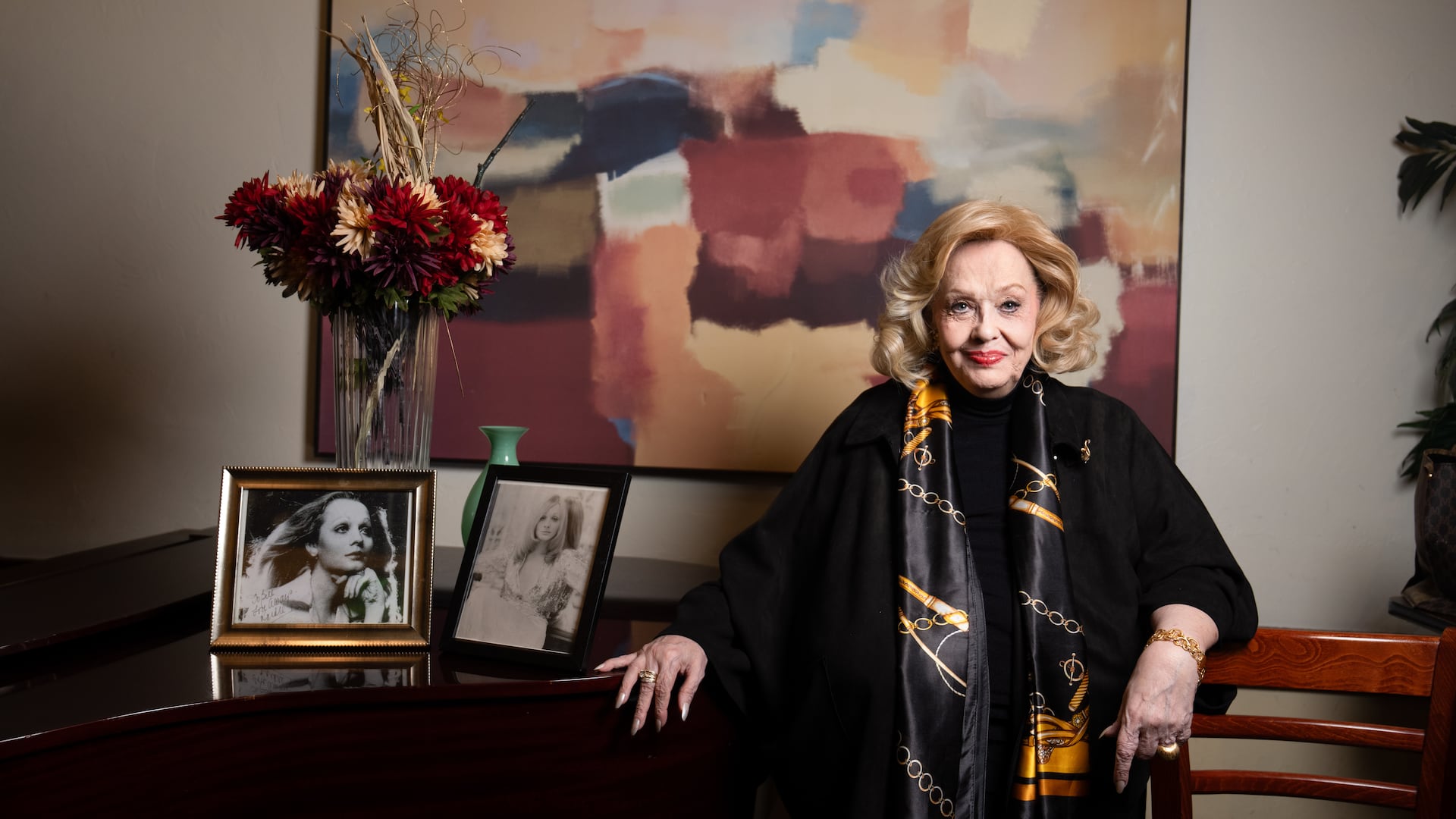
At 77, she is still beautiful and stylish; never stepping out without a fully made-up face and perfectly coiffed hair. She still gets dressed to the nines and goes out every now and then to Knock, the Gayborhood piano bar, owned by her dear friend Bill Wood and run by an attentive staff who dote on her. A Francesco Scavullo portrait of her remains permanently ensconced on the piano.
“Look, I have my friends, I see my remaining family members when I can, and I go out for a good time frequently. I enjoy the company of people when I want, on my terms,” she says. “I’m living exactly the life I want for myself at this time.”
She loves to tell a story that gets to the heart of just how she’s survived for so long, from the period just before she went to Cannes and lived in New York. “I went to Max’s Kansas City one night, very much not my scene I should add, and I was told that Andy Warhol was in the back room and wanted me to join him,” she says.
Warhol had been one of the judges of the pageant in The Queen and had become intrigued by her. When she approached his table, she noted that most of his entourage seemed pretty strung out. “Candy Darling was face down, practically in her soup! I said, ‘No, thank you,’ and got out of there.” To this day, she’s proud to tell people that she’s “the girl who said no to Warhol.”
It’s that quality, that quintessentially Philly attitude of “Leave me out of this mess” that has kept her in good stead all these years.
She credits simple advice imparted to her in her mother’s South Philly kitchen. “She sat me down just as everything started happening for me and said, ‘OK, then. If you’re going to do this, do it right.’” She emphasizes the last three words with a vehemence that underlines their importance to her.
“‘Don’t spit in the air,’ she told me. ‘It will only wind up landing on you.’”
Harlow is eager to have her story told now, compiling her memoirs and working with Oscar-nominated executive producer Christine Vachon — who produced Carol and Boys Don’t Cry — along with producers Liz Levine and Adrian Salpeter, on a planned movie based on her relationship with Kelly.
“I’m drawn to stories of people who rewrite the rules of survival. Rachel did that with style and defiance,” says director Aitch Alberto, who is also attached to the project. “She proved that identity can be a weapon and a crown at the same time.”
She’s motivated to speak by a large and well-funded conservative movement that has currently placed the rights of transgender people under greater threat than they’ve been for well over half a century. “It’s so important now — more important than ever — to tell my story," she says.
“My God, look where we are now, where this … regime keeps attacking us! Fifty years ago, people didn’t care! We need to remind them.”
Every time she goes out, a crowd of admirers eventually surrounds her, kissing her ring and serenading her — both quite literally. Sitting by her side at Knock like a couple of royal scribes while she held court, we’ve met fashion, jewelry, and costume designers, cabaret artists, playwrights, figure skaters, gallery owners, retired surgeons, and elderly socialites, all of whom vie for a moment of her attention.
“Sixty years later, to be remembered when everything in this world is a seven-day wonder, and they forget you and throw you out like so much trash,” she says with emotion and gratitude.
Harlow chose to put the glare of the spotlight behind her over 30 years ago, but her city never forgot her, and whenever she steps out, Philadelphians still line up just to tell her.
“People have always been so kind to me,” she marvels, adding with a pleased smile, “But then, one always is, to a unicorn.”
Tom Fitzgerald and Lorenzo Marquez are the authors of “Legendary Children: The First Decade of RuPaul’s Drag Race & The Last Century of Queer Life.” They are currently working with Rachel “Harlow” Billebault on her memoirs.

- In the 1970s, she was a trans icon and Philly's nightlife queen. Now, she's ready to talk.
- How to have a Perfect Philly Day, according to Gritty
- My neighbor’s rowhome Christmas lights shine directly into my bedroom. What should I do?
- Eggs belong at breakfast, not on Patullo’s house | Weekly Report Card
- The best things we ate this week
- Citywide Quest: Do you know where in Philly these winter-themed photos were taken?
- Holiday shopping, coastal trails, and craft beer in Lewes & the Delaware Beaches | Field Trip
- In Port Richmond, this new homeowner found a way to buy her house without sacrificing all her savings | How I Bought This House
- Seeing the Ben Franklin Bridge reflected by steel spheres