Philadelphia School district seeks to fire social studies curriculum director amid antisemitism concerns
Ismael Jimenez filed suit against the school board Wednesday in federal court, alleging violations of his First Amendment rights.

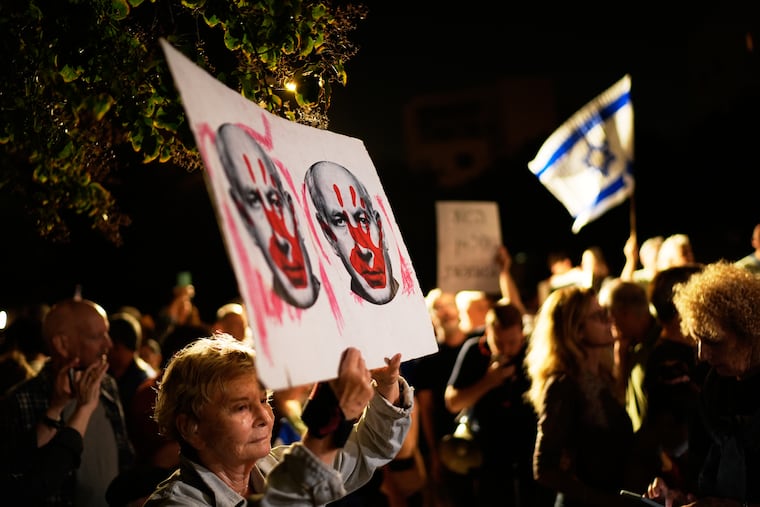
An outspoken educator once lauded and entrusted by the Philadelphia School District to direct the social studies curriculum is fighting to keep his job as the district faces sustained political pressure over allegations of stoking anti-Israel sentiment.
Superintendent Tony B. Watlington Sr. disclosed the revelation to Congress at a hearing initiated this fall as part of a federal probe of alleged antisemitism in the district — the second such investigation since the Oct. 7, 2023, Hamas attack on Israel and the war against Hamas that followed.
“Mr. Jimenez is in a termination proceeding,” Watlington told Congress, referring to Ismael Jimenez, the district’s social studies curriculum director, according to a transcript of the hearing released Oct. 21. After fielding complaints from some Jewish parents and outside groups, the district is now undertaking a “comprehensive review” of its social studies curriculum under the purview of a new chief academic officer he had hired, the superintendent said.
Watlington also said he has ordered a review of some teachers’ personal social media posts.
The House Committee on Education and the Workforce report concluded the district teaches students to “hate Israel” and “embrace radical” ideas. The school district roundly rejects the allegations, which it says were “blatantly partisan.”
Jimenez filed suit against the school district Wednesday in federal court, alleging violations of his First Amendment rights. He said he has suffered financial loss, professional injury, and deterrence of protected expression" from the district’s “unlawful retaliation” over his personal social media posts.
Jimenez could be the first district employee to lose a job amid the furor over its handling of antisemitism allegations. Others in the city’s school district have been investigated over personal social media posts and allegations of expressing antisemitic or anti-Israel sentiments in a school setting, but only one other district educator has faced similar discipline.
That teacher, Keziah Ridgeway, received a suspension but continues to teach in the district. She is currently suing the school system, alleging anti-Islamic bias.
Jimenez, whose name was invoked 33 times during the daylong hearing, said in an interview he believes the termination attempt and curriculum changes represent the district “kowtowing” to conservative politicians in power and their allies.
“I think it’s appeasing the authoritarian and the fascist tendencies that the Trump administration made possible, that embolden demagoguery of these politicians who are using claims of antisemitism to stifle any type of critical history, critical social studies,” said Jimenez, 45.
Jason Holtzman, chief of The Jewish Federation of Philadelphia’s Community Relations Council — an organization that has lodged multiple complaints about Jimenez to the district since 2024 — dismissed the notion that the district was reacting solely to the Trump administration.
“As director of social studies for the entire district, Jimenez made statements on camera that rationalized the Oct. 7 massacre and denied the Jewish people’s connection to the land of Israel,” Holtzman said in a statement.
“The Jewish Federation of Greater Philadelphia has raised concerns about Jimenez’s conduct for years, and Jewish parents in Philadelphia asked the district to address these issues more than two years ago, long before the congressional investigation. The concern is not simply how long it took the district to act, but why Jewish students and families had to wait so long for their experiences to be taken seriously.”
The House committee that grilled Watlington has caused ripples in Philadelphia before. In 2023, the University of Pennsylvania’s then-president Liz Magill was called to testify about the university’s handling of antisemitism on campus after Hamas’ Oct. 7 attack. She resigned after days of pressure and ire over her testimony.
A sharp U-turn
Hundreds of pages of documents related to Jimenez’s disciplinary hearings and termination proceedings, obtained by The Inquirer, paint a picture of an educator whose career took a sharp U-turn at the time outside groups began complaining about him.
Jimenez spent 12 years as a district social studies teacher, first at Germantown High, then at Kensington High School for the Creative and Performing Arts. He had no disciplinary incidents during that time.
In 2022, he was promoted to become a social studies curriculum specialist, and then the social studies curriculum director, a job that pays $137,669 annually. The district in 2024 pointed to him as an exemplary employee.
“Mr. Jimenez has invested in the deep and critical work of expanding our city and district’s knowledge and consciousness of the power that Black and African American people have always held, while also advocating for the resources that enable Black and African American communities to truly thrive,” district officials wrote in a February 2024 post celebrating standout Black educators, noting their “immense gratitude and admiration” for Jimenez’s work.
Later that year, in the wake of the Oct. 7 attack on Israel and the start of the politically divisive war between Israel and Hamas, a new group called the School District of Philadelphia Jewish Family Association began lodging complaints about Jimenez.
On March 13, 2024, the SDPJFA sent an email blasting Jimenez to the school board, Watlington, and the district’s chief counsel. Its members, who are not named, objected to what it said was Jimenez’s purchase and distribution of a book about the “colonization of Palestine” for his central office team. The book, the group said, was an attempt to “directly distribute controversial, political information to be shared in classrooms across the district,” which it considered biased, one-sided, and a violation of district policy.
Jimenez, in correspondence with a district official, said that the group’s claim was wrong — another curriculum team member purchased the books, not him. And the books were meant for and distributed only to his curriculum staff, not to schools or students, he said.
The group also objected to Jimenez’s personal social media accounts, which it said contained “antisemitic and anti-Israel views.” The group said they believed the accounts blurred the lines between professional and personal, as Jimenez disclosed his job title.
Jimenez, in the Inquirer interview, said the groups — and Congress — took personal posts out of context, including a post from 2020, when he was still a classroom teacher. In the 2020 post, Jimenez wrote that “Israel is a terrorist state,” which he said was a response to a specific killing.
“I was not talking about an ethnic group,” said Jimenez. “I was not saying, ‘Jewish people are evil,’ or something crazy like that. I literally said the state of Israel, so I was talking about a government, and I made it very clear.”
In April of 2024, the district commissioned an outside firm to investigate possible improprieties by Jimenez.
The investigation came as protesters opposed to Israel’s military campaign in Gaza were setting up encampments on university campuses around the country, including at Temple and the University of Pennsylvania. Some Jewish students on these campuses said they no longer felt safe as peers and outside activists protested Israeli actions, inciting debate over what was protected free speech and what was antisemitism.
The Jimenez investigation concluded the educator did not purchase or approve improper or antisemitic learning material, and that the district did not “act indifferently in permitting the creation of a hostile environment in its schools with regard” to Jimenez.
Investigators also, at the time, found that while Jimenez’s personal social media posts were protected by the First Amendment, they violated district policy and were a “cause for concern,” according to the investigation report.
More scrutiny
Soon after that outside investigation concluded, Jimenez’s supervisors began reviewing social studies curriculum in ways they hadn’t before the outside complaints about his work, he said.
In June, an activist group backed by GOP donors accused Jimenez of antisemitism with a mobile billboard parked in front of district headquarters and Jimenez’s home. Around that time, similar billboards parked outside the University of Pennsylvania and schools in Central Bucks school district accused other educators of antisemitism.
Jimenez subsequently got written up multiple times, according to district records, with claims of insubordination and not following directives — such as one to respond to an email about proposed professional development sessions on antisemitism and Islamophobia. (Jimenez told his supervisor he had been instructed by his lawyer “not to touch” issues like that one, presumably because of the ongoing outside complaints.)
He was also cited for participating in a radio interview that was streamed on Facebook, and for “liking” posts on his personal account including “Zionism is Racism” and “... the connection of Israel with the system of white supremacy …”
Jimenez, in a response to one write-up, said the district’s social media policy was not clear on whether such passive engagements constituted endorsement or policy violations.
In July 2024, a complaint was filed with the U.S. Education Department’s Office of Civil Rights, alleging repeated harassment of Jewish students and acts of antisemitism in the district. After a federal investigation, that claim was later settled when the district agreed to more robustly investigate such claims and beef up its antidiscrimination training for students and staff.
Jimenez that August made an internal complaint about a “toxic work environment,” citing pressure in the wake of the outside pressure and what he said was a lack of support from the district.
In a June 2025 written protest of another disciplinary report, Jimenez said the district’s “actions reflect a troubling pattern of increased scrutiny and appear to be influenced by external attacks on my character rather than any documented violation of district policy. Before the circulation of third-party defamation, there were no documented concerns regarding my work performance.”
Jimenez was eventually suspended with pay, and then without pay, before termination proceedings began in October 2025. Those proceedings are still ongoing, and he is fighting them.
But the scrutiny continues — in February, for instance, the Committee for Accuracy in Middle East Reporting and Analysis, a pro-Israel group, issued a report denouncing the district’s social studies curriculum, which it found is “grounded in a critical race theory framework” and “emphasizes a thematic ‘history of grievance,’ largely at the expense of chronological historical study.”
Jimenez, who has filed complaints with the Pennsylvania Human Relations Commission and the district’s Office of Inspector General, believes the shift from the district promoting him and praising his work to writing him up and now attempting to fire him “is connected to people being scared about these outside attacks,” he said in the interview.
Nearly 2,000 people have signed a petition urging the district to reinstate Jimenez.
“We are concerned that the district has capitulated to the racist, right-wing, and pro-Israel forces that have been attacking Ismael and other antiracist teachers in the school district,” said the petition, started by the Teacher Action Group and Philly Educators for Palestine, a group that recently disbanded.
Aaron Terr, vice president of public advocacy for the Foundation for Individual Rights and Expression, said he did not know enough about Jimenez’s specific case to speak to whether the district’s treatment of him is an attempt to placate political forces.
“The Trump administration has a history of wielding anti-discrimination law against educational institutions in ways that raise serious First Amendment concerns,” Terr said in a statement. “But whatever pressure they face, districts need to meet their dual obligations of addressing discriminatory harassment and respecting educators’ First Amendment rights.”
What Watlington told Congress
Watlington stands by the district’s curriculum, he told the House Education and Workforce Committee, led by U.S. Rep. Tim Walberg (R., Mich.).
Still, Watlington told Congress the district would not use teacher-written social studies curriculum going forward. Watlington said he gave his new chief academic officer, Michael Farrell, the charge to switch to a nationally vetted curriculum, following the standardization of math, English, and science curricula over the past several years.
Jimenez noted the teacher-written social studies curriculum now planned for replacement in the 2027-28 school year was nationally vetted — by the Council of Great City Schools.
“We spent years doing serious intellectual work, developing curriculum grounded in historical inquiry, evidence, and civic reasoning,” he said. “Teaching students about colonialism, resistance, economic inequality, or injustice is not indoctrination. These are essential parts of understanding history and the world we live in. The quality of our work should be judged by its historical accuracy, instructional design, sources, and assessments, not isolated excerpts used to advance a political argument.”
Members of Congress and their staff repeatedly grilled Watlington on posts and activities by individual district employees — not just Jimenez, but also some district teachers, including Hannah Gann, who recently made headlines for pretending to be Black and Palestinian. (She is white and Jewish.)
The stakes are high, as evidenced by Magill’s fate after the Penn congressional hearing.
Watlington said he had told his human resources department to conduct a “look-back” at some district staff’s personal social media posts that may have violated harassment and discrimination policies, even if those had already been probed.
The district was required to examine “any complaint received, regardless of source, related to discrimination based on national origin, shared ancestry,” Watlington told the committee. It agreed to do so in a voluntary settlement of a Department of Education complaint over allegations of antisemitism, but the superintendent said he went further “to do a comprehensive look-back” at any posts that were flagged between 2024 and the present.
“I want to know if anything was missed, quite frankly,” Watlington said. “I’ve asked for a look-back to ensure that things that were investigated, that we didn’t miss anything and that it was done properly.”
Congressional staff cited a 2025 chat on Signal, a private, encrypted messaging platform, started by some district teachers, but allegedly including some district students.
Gann, in the chat, advertised a rally for “rage” and “resistance” with a graphic showing a bulldozer breaking through a fence, as Hamas did during its Oct. 7 terror attack. Watlington was asked whether it was appropriate to share such an image with students
“Absolutely not,” Watlington said. “Let me be crystal clear — teachers have no business, under any circumstances, communicating with children on private chats. Period.”
Staff also pointed to social media posts by Gann and by Shaw MacQueen, another district teacher active in the group Philly Educators for Palestine, which disbanded recently after Gann’s deception was revealed.
Asked if Gann had been disciplined for her posts, Watlington said, “I do know that Ms. Gann, as well as some other individuals, are being reviewed currently.”
Gann declined to comment on the congressional investigation.
MacQueen, who remains a district teacher, said he was surprised to find himself mentioned in a congressional hearing.
He said he was concerned about “continuing attacks” on educators and critical race theory, and also expressed support for the district’s current social studies curriculum and Jimenez.
MacQueen said he was disappointed in the district, which in the past publicly committed to equity and antiracism work, but now is “just going to sit there and say what these people want you to say. I see it as just the continuation of an ongoing history of trying to scare individuals from speaking out, to stop them bringing a light to injustice.”