Philadelphia health officials report a measles exposure at CHOP
Health officials said the potential exposure took place in a NICU and other locations on Sept. 11 at the hospital at 3401 Civic Center Blvd.
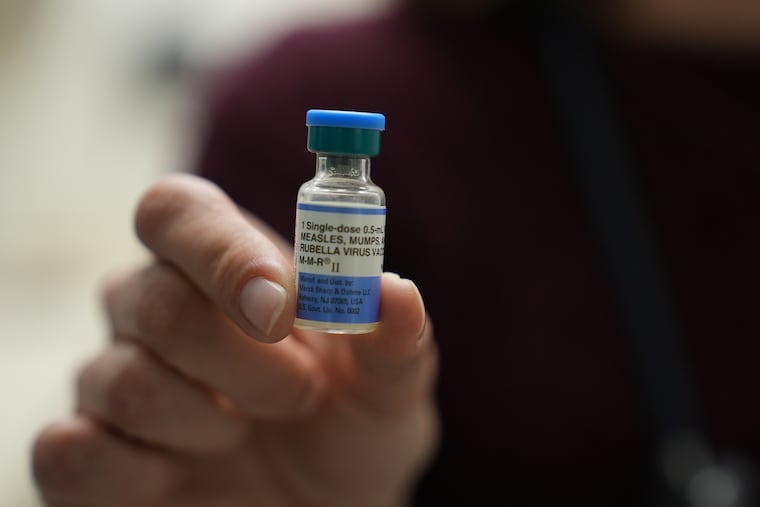
Philadelphia health officials warned that people may have been exposed to measles at the Children’s Hospital of Philadelphia in West Philadelphia on Friday.
Health officials said the potential exposure took place at the following times and locations on Sept. 11 at the hospital at 3401 Civic Center Blvd.:
CHOP neonatal intensive care unit (NICU) West: 9:30 a.m. to 4:15 p.m.
CHOP NICU West Family Lounge: 9:30 a.m. to 4:15 p.m.
CHOP Atrium: 9:30 a.m. to 4:15 p.m.
CHOP main cafeteria: 12:05 p.m. to 2:45 p.m.
In a press release, Philadelphia’s health department said that they are working with CHOP and the state health department to ensure infants in the NICU receive a “preventive antibody product” to protect them from contracting the highly contagious virus, or to lessen the chance they develop a serious disease.
Measles can infect up to nine in 10 unvaccinated people exposed to it, and can linger in the air for up to two hours.
People who were exposed at the hospital should check their vaccination status and watch for symptoms of measles, the city health department said.
Symptoms of measles include a fever, a runny nose, a cough, and red, watery, eyes, followed by a rash. Most cases are mild, but the disease can cause severe complications, including pneumonia, brain infection, and death. Young children are at particular risk for complications.
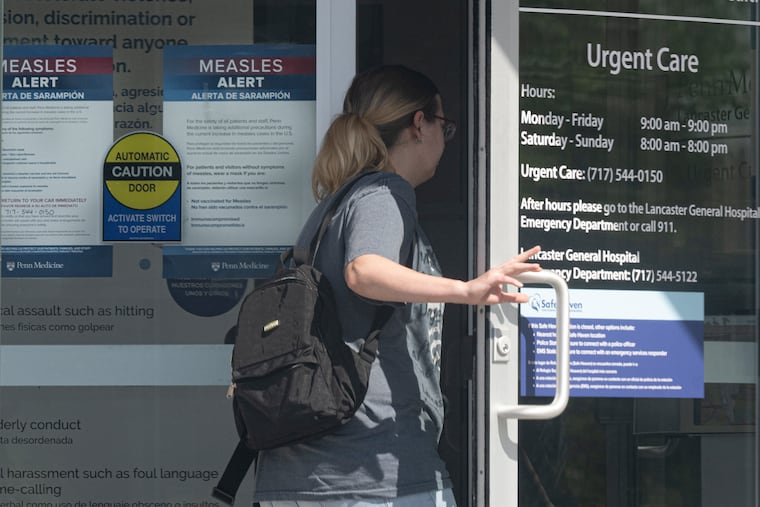
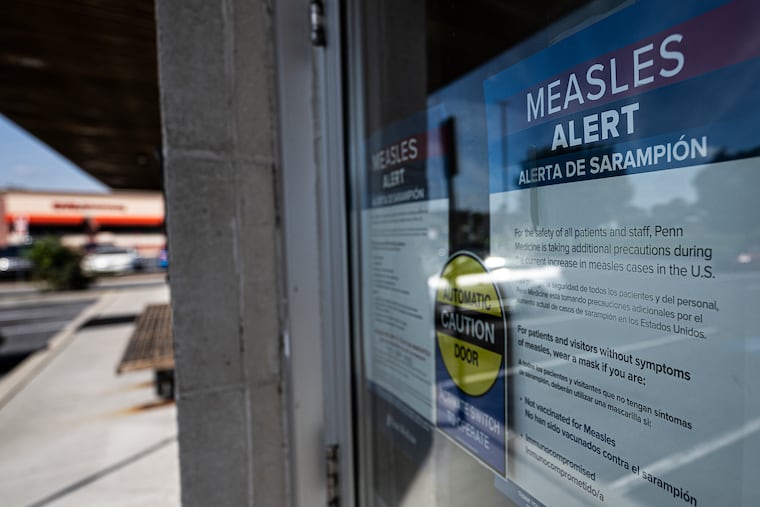
The exposure comes as Pennsylvania deals with a major measles outbreak that, as of Wednesday, has sickened 731 people across 38 counties, including in neighboring Chester County, which has reported 67 cases this year. State officials have confirmed four measles-associated deaths in the last several weeks, and have clashed with federal officials over how to characterize the deaths.
Philadelphia has not reported any cases of measles, though the health department earlier this year noted potential measles exposures at the airport and 30th Street Station.
Philadelphia Health Commissioner Palak Raval-Nelson said in a statement that she did not believe the exposures at CHOP poses a “broad risk” to Philadelphians because most are vaccinated.
But she urged residents to ensure they get the measles, mumps, and rubella vaccine.
“Given the ongoing outbreaks in Pennsylvania and other places, it is imperative that everyone who is not up to date on their MMR vaccine gets their vaccine as soon as possible,” she said. “Remember, this is not just about protecting yourself, it’s about protecting our most vulnerable Philadelphians.”
Some people cannot be vaccinated, including infants too young for the vaccine, pregnant people, and some immunocompromised people.
Typically, children get their first dose of the MMR vaccine at 1 year old, and a second between 4 and 6 years old.
In recent months, as Pennsylvania’s measles outbreak has spread, state officials have recommended vaccinating children early if they live in or are traveling to areas with measles.
City officials said they recommend an early first dose of the MMR vaccine for infants between six and 11 months old before international travel or travel to affected areas in Pennsylvania.
Children from 1 to 4 years old should also get their second dose of the MMR vaccine early, at least 28 days after their last dose, officials said.
People who were possibly exposed at CHOP should determine if they’re protected against measles, officials said.
People are generally considered immune if they were born before 1957, have already had measles, or have received two doses of the MMR vaccine.
City officials said that people who have only received one dose of the MMR vaccine have a low risk of contracting measles from the CHOP exposure, but they should discuss getting a second dose with their doctor.
People who are protected against measles don’t have to do anything else, officials said.
People who are not immune to measles should get a dose of the MMR vaccine, officials said. People under 12 months old, pregnant people who are not immune, or people with a weakened immune system should consult a doctor as soon as possible.
Those who are not immune and may have been exposed at CHOP should wear a mask in indoor public spaces and around any unvaccinated people until three weeks have passed since their exposure, officials said. On its measles website, the department said that people who are not immune should quarantine for 21 days, until Oct. 2.
In an email, deputy health commissioner James Garrow clarified that the department’s general recommendation is for exposed people to mask and monitor themselves for symptoms, and that the department would contact exposed people for whom they have “a higher level of concern” and recommend they quarantine.
This is because a person with measles can spread the virus for four days before a rash appears, and for four days after it starts.
Exposed people who aren’t immune to measles should call their doctor immediately if they develop measles symptoms through Oct. 2. They should inform their doctors that they’ve been exposed to measles, and notify the city health department at 215-685-6740. (Residents of other counties in Pennsylvania should call the state health department at 877-724-3258.)