Pennsylvania’s measles outbreak has cost taxpayers an estimated $16 million so far
As the cost of Pennsylvania's measles outbreak climbs into the millions, the United States has reportedly lost its WHO measles elimination status, a sign that outbreaks are becoming more frequent.
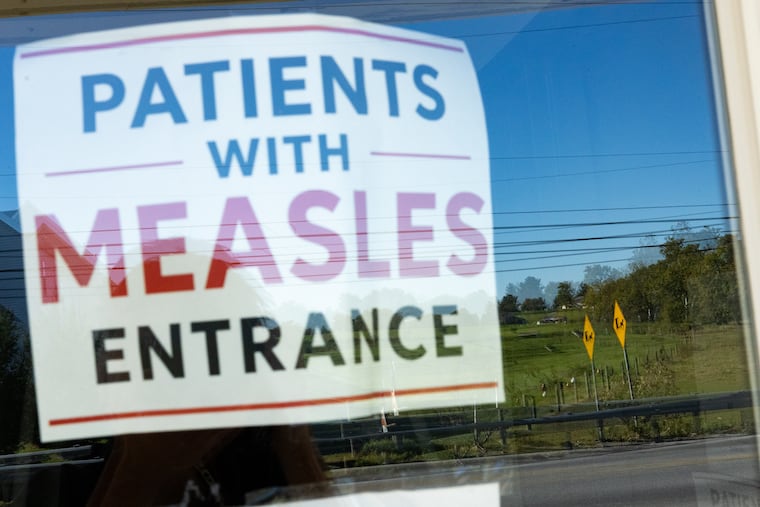
Pennsylvania’s measles outbreak has cost taxpayers $16 million so far, economists estimate, as state and federal health agencies scramble to contain the largest outbreak the nation has seen in three decades.
The Pennsylvania Department of Health has not released official cost estimates for the outbreak, but is in the process of analyzing expenses with a Centers for Disease Control and Prevention cost estimator tool.
The state has received $2.4 million in new funding from the CDC to expand lab capacity for measles testing and response, and immunization efforts. The CDC also authorized the health department to repurpose $1.1 million earmarked for avian flu toward its measles response.
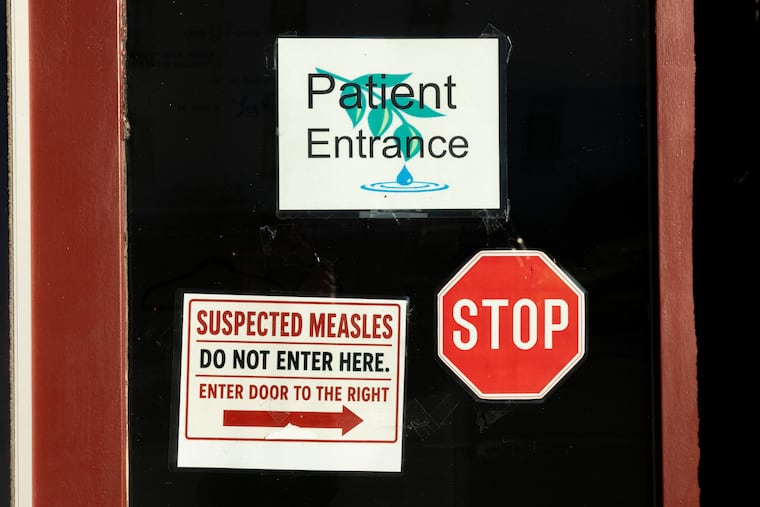
A tool developed by Johns Hopkins University experts to estimate the full costs of a measles outbreak shows that Pennsylvania, the federal government, and counties have likely spent at least $16 million trying to contain the most contagious virus known to humans. The measles response in Pennsylvania has required hundreds of additional staff to track down people exposed to the virus, calls urging those who are sick or exposed to isolate, thousands of extra vaccine doses, and new pop-up clinics to administer them.
And the outbreak could be driving millions more in lost productivity and medical costs.
» READ MORE: Pa. measles vaccine messaging depends on word-of-mouth to reach the Amish community
The extraordinary cost of an infectious disease outbreak may once have been considered a rare, emergency expenditure. But with vaccination rates declining and measles cases rising nationally, a regional division of the World Health Organization has reportedly revoked the United States’ measles elimination status, which it had held since 2000.
The Pan American Health Organization, which met last week, based its decision on epidemiological data from across the U.S. that showed outbreaks growing in size and scope, community spread (as opposed to cases among visitors), and waning protection afforded through vaccination rates. Media outlets citing sources familiar with the matter broke the news late Friday, and the international health agency said it would hold a briefing Tuesday.
» READ MORE: New vaccination data show hundreds of Philly-area schools vulnerable to a measles outbreak
Nationally this year, 5,412 measles cases had been reported as of Thursday — more than twice the total for all of 2025, according to the CDC.
Losing the largely symbolic label signifies that measles is once again endemic in the United States — spreading from one community to the next, surging in outbreaks when it reaches under-vaccinated groups, and racking up expenses society has avoided for decades by maintaining strong vaccination.
“The ability for states to have unlimited funds to respond to this is unrealistic,” said Bryan Patenaude, an associate professor of economic evaluation and health economics at Johns Hopkins University Bloomberg School of Public Health.
Eventually, lawmakers will need to decide if they can divert money from somewhere else, if they should raise taxes, “or if we stop responding,” he said.
Cost of measles in Pennsylvania
Through an online measles tracker updated three times a week, the Pennsylvania Department of Health discloses every reported case and hospitalization, though the tally is largely believed to be an undercount.
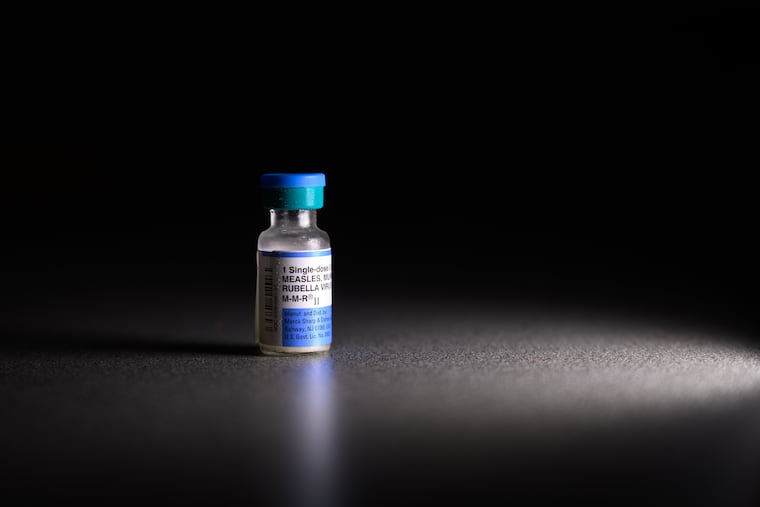
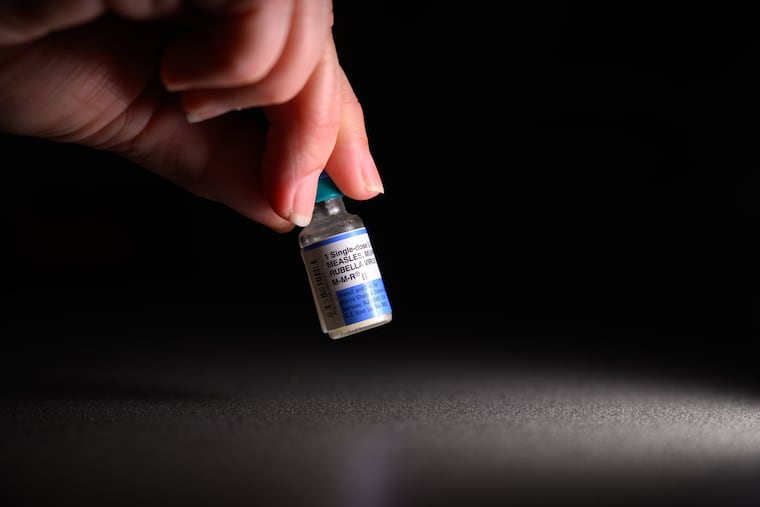
No public ledger exists to give the public a detailed view of the accumulating expense of managing the outbreak. The health department said it has 300 staffers dedicated to the measles outbreak and has administered about 11,400 doses of the measles, mumps, and rubella (MMR) vaccine this year.
The agency said it was unable to provide information about how much money the state has spent on its efforts.
To map out what costs look like as an outbreak spreads, the International Vaccine Access Center at Johns Hopkins Bloomberg School of Public Health developed a cost estimator tool.
The tool uses data from past national outbreaks, as well as state-level population, socioeconomic, and hospital data to crunch custom estimates, all based on the number of cases fed into the prompt, said Patenaude, who helped develop the cost estimator.
Plug in Pennsylvania’s roughly 1,500 cases, and the Hopkins tool draws up a roughly $16 million public health tab: About $9.7 million would come from federal programs such as the CDC’s Vaccines for Children immunization initiative and a dedicated public health fund created under the Affordable Care Act.
State and local health departments would pay the remaining $6.5 million.
» READ MORE: Pennsylvania tops 1,500 measles cases as the U.S. could lose its measles elimination status this week
In addition to the $16 million expense to the county, state, and federal governments, the outbreak has also cost Pennsylvania residents an additional $7 million in lost productivity, such as missed work and school, the tool estimates. Direct medical expenses add $500,000 to the estimated costs.
Those expenses are harder to predict, and exactly who pays the bill is less clear.
For instance, when calculating direct medical costs, the tool assumes that roughly two in three people sickened have private health insurance, with an additional 16% covered by Medicare or Medicaid.
But the state’s outbreak has been especially widespread in under-vaccinated Amish and Mennonite communities, which typically do not participate in the government-funded Medicare or Medicaid health coverage programs, and may not have private insurance.
Pennsylvania has reported unusually high levels of illness among adults. About one in five Pennsylvania cases has required hospitalization, a higher rate than in the past national outbreaks that helped inform the Hopkins estimator tool.
» READ MORE: Measles is thought of as a childhood illness, but more Pa. adults are getting sick
Estimating outbreak costs
In South Carolina, a measles outbreak sickened 997 people, primarily children, and sent 21 to the hospital between October 2025 and April of this year.
After declaring the outbreak over, the state health department estimated that South Carolina had spent $2.1 million on its response efforts, which included working with 33 affected schools, more than 1,600 case investigator phone calls, and nearly 14,800 additional doses of the MMR vaccine.
“Ending this outbreak was a monumental effort,” Brannon Traxler, who currently serves as acting director of the South Carolina Department of Public Health, said in a call with reporters in April.
The state’s estimated cost did not include federal or county spending, medical expenses, or the wages sacrificed by families to care for the sick.
Responding to a measles outbreak has a startup cost of about a half-million dollars when the first case is confirmed, according to Hopkins estimates. Each additional case may cost between $10,000 and $16,000.
In 2019, officials estimated that a much smaller outbreak of 71 people in a county in southern Washington state outside Portland, Ore., had cost about $2.3 million in local, state, and federal public health response spending. Neighboring counties and nearby states also sent assistance.
“It was all hands on deck,” said Alan Melnick, who served as Clark County’s health officer at the time.
The United States reported a total of about 1,200 measles cases in 2019, the highest rate since the nationwide outbreak in 1991-92. But large outbreaks were still rare.
Now, Melnick worries how local health leaders would manage if they were all stretched thin responding to the same threat.
“There isn’t going to be that kind of help to do this intensive work when the burden gets high,” he said.
Ongoing outbreak expenses
Regardless of the exact cost of each individual outbreak, economists say that responding to outbreaks more frequently could quickly become unaffordable.
In response to rising measles cases, the CDC earlier this year issued $100 million in grants to states, including $1.2 million for Pennsylvania.
The cash injection will help, but is not enough to provide a sustained outbreak response, experts say.
“It’s hard to plan a comprehensive response with one-time funding,” said Brent Ewig, chief policy and government relations officer for the Association of Immunization Managers, a nonprofit organization that represents state and city vaccination programs.
» READ MORE: CDC sends a ‘disease detective’ to Pennsylvania as measles cases top 1,200
The CDC’s $682 million immunization program is a leading source of funding for outbreak response efforts, which typically include getting out thousands of extra doses of the MMR vaccine.
Public health advocates are pushing Congress to nearly double the immunization program’s budget, from the $682 million allocated for years to $1.1 billion.
Vaccination alone cannot halt an outbreak, but it can prevent one — and preventing an outbreak is more cost-effective than responding to even a single measles case, Ewig said.
“People are dying in America for things that are preventable,” he said. “That’s going to continue unless we get our vaccination rates back up to where they were.”

-
Your questions about Pennsylvania’s measles outbreak, answered
-
Measles is thought of as a childhood illness, but more Pa. adults are getting sick
-
New vaccination data show hundreds of Philly-area schools vulnerable to a measles outbreak
-
Chester County has more measles cases than most entire states in the country
-
Pa. measles outbreak is nation’s worst, echoing deadly 1991 Philadelphia epidemic
-
Pa. measles vaccine messaging depends on word-of-mouth to reach the Amish community