The big question looming over Brazil’s elections: Trump’s next move
Having watched the U.S. president wade into other Latin American elections, Brazil is erecting a firewall to try to shield its high-stakes vote.
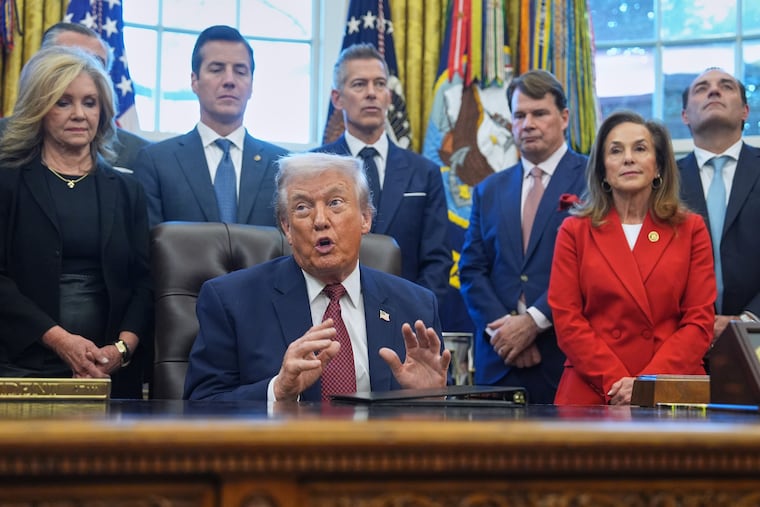
BRASÍLIA, Brazil — Since taking office, President Donald Trump has become an electoral kingmaker in Latin America. Right-wing candidates aligned with Washington have won the past seven elections in the region, with Trump explicitly endorsing the winner in two of them.
“We’re doing very well in South America,” Trump told reporters this month. “Lots of people that I got elected.”
Now comes the biggest regional test for the right and for Trump’s record of success: Brazil.
As Brazilians prepare to head to the polls, the question looming over Latin America’s largest democracy is whether Trump will try to influence its presidential election next month.
The American leader has not openly championed any Brazilian candidate. But the Trump administration has in more subtle ways lifted the right-wing challenger, Flávio Bolsonaro, who is running against President Luiz Inácio Lula da Silva, a leftist.
Having watched Trump wade into other elections and experienced his failed attempt to help Bolsonaro’s father avoid prison for plotting a coup, Brazil is erecting a firewall to try to shield its high-stakes vote from potential U.S. meddling.
The efforts include monitoring foreign lobbying and disinformation, fighting false claims about electoral fraud, and enlisting the support of countries in Europe, Asia, and elsewhere.
This article is based on interviews with more than a dozen Brazilian government and electoral officials, law enforcement officers, intelligence agents, and foreign diplomats. Many spoke on the condition of anonymity because they were not authorized to speak publicly.
Bolsonaro’s campaign and the State Department did not immediately respond to a request for comment.
The concern for many in Brazil is that, in a narrow contest where polls show Bolsonaro and Lula practically tied, a helping hand from Trump could tip the scales in the challenger’s favor.
The Trump administration has rejected Brazil’s claims that it is seeking to interfere, even though it tried this summer to send a U.S. delegation to investigate Brazil’s electoral integrity.
American help, Brazilian officials said, could come in the form of more measures to hurt Lula’s image. Trump used sanctions and tariff threats in an attempt last year to save Jair Bolsonaro, Flávio Bolsonaro’s father, who tried to cling to power after falsely claiming the last election was stolen. That failed, and he was sentenced to 27 years.
Many also worry about online campaigns from abroad aiding Bolsonaro.
A recent wave of paid social media posts, shared by prominent U.S. right-wing accounts, added to those fears. The posts amplified claims by Polymarket, the predictions market backed by Donald Trump Jr.’s venture capital firm, that Bolsonaro stood staggering chances of winning, deviating wildly from polls showing no clear front-runner.
Lula, among the few world leaders to take on Trump, has made clear he is prepared to defend his country’s interests.
“The Americans better not come trying to influence our elections,” he said this month. “Trump should mind his own country’s business.” Speaking at the United Nations last week, he blasted foreign meddling into his country’s sovereign affairs, without naming the United States: “Brazil is nobody’s backyard.”
He also launched a searing campaign video accusing the Trump administration, without offering evidence, of helping his rival and interfering in Brazil’s elections with an eye to seizing its natural resources.
Brazil, a vast nation of 210 million, has an economy powered by commodities the world needs and institutions that are not afraid to push the limits of democracy in the name of saving it.
“Wherever the threat may come from, we have the tools to defend ourselves,” said Gilmar Mendes, Brazil’s longest-serving Supreme Court justice. “If necessary, there will certainly be a forceful response.”
The Trump factor
Worried about campaigns orchestrated from abroad, Brazil’s intelligence agencies have made combating foreign manipulation through social media a top priority.
The court that oversees elections has also set new rules for electoral misinformation, asking companies such as Google and Meta to submit plans for combating misleading videos and posts generated by artificial intelligence.
And, amid renewed attacks by Bolsonaro’s allies in Brazil and abroad about the credibility of the country’s voting systems, authorities began a major campaign, complete with a mascot, aimed at strengthening trust among voters, diplomats, and international observers.
A win by Bolsonaro would bolster ambitious plans laid out by Washington to expand its influence in Latin America through right-wing allies.
“Under our new national security strategy, American dominance in the Western Hemisphere will never be questioned again,” the State Department said in a recent, lengthy video.
Brazil represents the biggest remaining prize. As president, Bolsonaro would more likely align with the United States on issues including organized crime and critical minerals. (Lula has said Brazil would not hand over its natural resources.)
And leaked documents written by an ally of Bolsonaro, reported by Brazilian media and reviewed by the New York Times, suggest people close to the candidate may have proposed giving the United States access to Brazil’s critical minerals in exchange for support. The document’s author acknowledged producing it, but denied that they wrote it on behalf of Bolsonaro’s campaign or that it was shared with U.S. officials. Bolsonaro’s campaign did not immediately respond to questions about the document.
U.S. Secretary of State Marco Rubio has cast Brazil as unfriendly to American interests, lumping it in with U.S. adversaries like Cuba and Nicaragua.
Many in Brazil have bristled at the idea that Trump, who was once recorded asking a state election official in Georgia to “find” more votes, should be stepping into another nation’s elections.
“With all due respect,” said Mendes, “the United States has no lessons to teach us when it comes to electoral systems.”
American help
In Brazil, worries about American meddling have dominated political discourse and editorial pages for months. And to many, the Trump administration has already been propping up Bolsonaro’s candidacy in indirect ways.
At a time when Brazilians are deeply worried about security, Trump yielded to lobbying by Bolsonaro to designate two Brazilian gangs as terrorist groups.
The administration also tried to send U.S. envoys to meet Bolsonaro in Brazil and investigate the country’s voting systems, which prompted Brazilian officials to block the visits.
If his son, Flávio, loses, there are signs the candidate could launch similar claims of electoral cheating — and his allies expect to find a sympathetic ear in Trump.
After the last election, President Joe Biden recognized Lula’s victory within hours. Even so, Bolsonaro’s claims of fraud inspired his supporters to storm the capital, in a riot reminiscent of the Jan. 6 attack on the U.S. Capitol.
Counterattack
International experts agree Brazil’s electronic voting machines, a frequent target of Bolsonaro’s movement, are some of the most secure in the world.
Yet a poll last month showed 34% of Brazilians distrust the voting machines, up from 20% in 2022.
The electoral court has invited political parties and hackers to test the machines and greatly expanded randomized auditing.
On a recent weekday at the electoral court, social media influencers snapped selfies with an election mascot shaped like a voting machine. The court also hosted more than 80 diplomats for a workshop touting Brazil’s electoral system.
“We opened our doors to the world,” said Justice Kássio Nunes Marques, the chief of the electoral court. “We went about dismantling every argument.”
And with U.S. support no longer a given, Brazil has worked to shore up international backing elsewhere.
Diplomatic missions from the European Union, Canada, Japan, Australia, and other countries, worried about interference from Washington, are holding informal talks on how to jointly respond after the election, according to three senior foreign diplomats.
These diplomats said allies are likely to quickly defend the vote’s integrity no matter who wins, but they also worry about displeasing Washington.
This article originally appeared in the New York Times.