Ground stop highlights chronic vulnerabilities in air traffic system
Transportation Secretary Sean Duffy blamed the problems on either contractor "incompetence" or a faulty router.
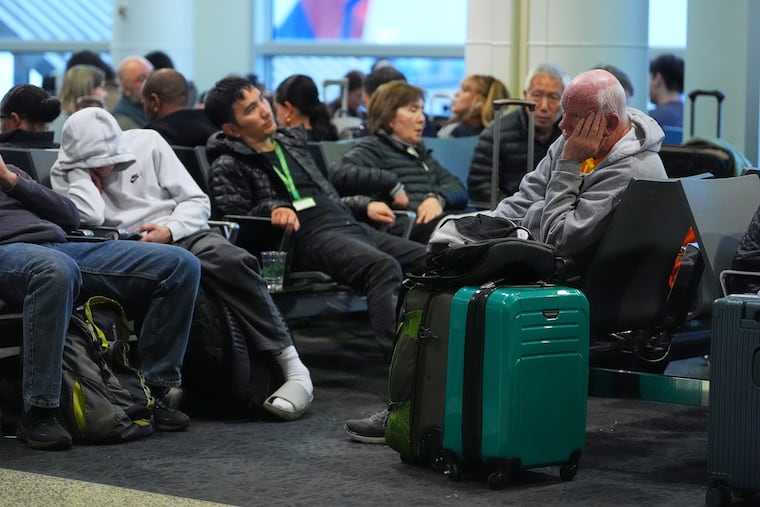
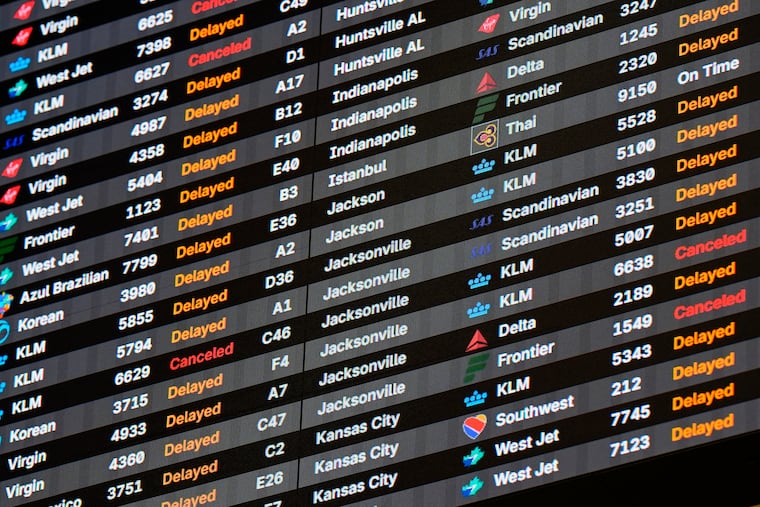
WASHINGTON — The nationwide ground stop that brought air travel across the country to a halt Friday evening has highlighted persistent weaknesses in the Federal Aviation Administration’s aging air traffic control infrastructure that has had several disruptive failures in recent months.
Officials called the rare ground stop after outdated communications lines became overloaded and began to fail, interrupting communication lines between air traffic controllers and pilots, according to Transportation Secretary Sean Duffy and Homeland Security Secretary Markwayne Mullin.
The breakdown occurred less than two months after a circuit failure and severed fiber optic cable caused crippling ground stops and delays at airports along the East Coast. Smaller outages unfolded in October at Raleigh-Durham International Airport in North Carolina and George Bush International Airport in Houston, when contractors accidentally cut into fiber line.
The Friday ground stop, which was only the third the FAA has issued this century, eclipsed the fallout of previous air traffic communications equipment failures. The FAA has yet to identify precisely what caused communication lines to falter.
The Associated Press reported that Bryan Bedford, administrator of the Federal Aviation Administration, said Saturday that the U.S. air travel schedule should be back to normal by the end of today. He said airlines “will still have delays and cancellations” Saturday but promised that the “worst is behind us.”
New technology being added to the nation’s air traffic control system overloaded antiquated equipment and caused “intermittent” communications and radar gaps, leading to the ground stop that lasted more than four hours Friday, Trump administration officials said.
Duffy said a contractor had been working on replacing a section of the system’s old copper wire with new fiber wire, and that work somehow caused the system overload. Duffy said officials were investigating whether contractor “incompetence” or a faulty router was the cause.
“Our contractor didn’t meet the moment,” Duffy said.
But the successive episodes of such problems have underscored the structural vulnerabilities that continue to hamper air traffic controllers’ ability to safely manage flight traffic, even after concerted efforts to make improvements. And they raised questions about whether the federal authorities have done enough to create backup systems and redundancies to prevent disruptive or even catastrophic failures.
For decades, air traffic communications have relied on a system that runs on analog copper wire, floppy disks, and alphabetical keyboards so old that the FAA has difficulty sourcing spare parts. Last year, Congress approved $12.5 billion in funding to help pay for upgrades, after a series of outages in air traffic control facilities, including the one serving Newark Liberty International Airport in New Jersey, caused alarming losses of radar and other communications capabilities.
Earlier this month, L3 Harris, the primary telecoms contractor tasked to manage the system upgrades, boasted on its website that it had converted about 70% of the copper line to fiber optic cable; last week, the FAA announced it would begin to phase out floppy disks.
But the disruptions in recent weeks showed that those upgrades had serious vulnerabilities themselves.
In September, when a circuit at a regional air traffic facility failed, operators had no backup options beyond the fiber line, 600 feet of which they discovered — to their surprise — had been severed by a construction crew in New Jersey working on Amtrak project. More than 430 flights were canceled before the system was fixed several hours later.
A similar incident occurred in October at the Raleigh-Durham International Airport in North Carolina, when a contractor working on plumbing accidentally severed a fiber line. The airport was forced to issue a ground stop for several hours. Just one day after that, officials were forced to issue a ground stop at George Bush International Airport, when yet another contractor inadvertently severed a fiber line.
The fiber line upgrades themselves, Bedford, the FAA administrator, told reporters at the time, were not enough to save the system from failure.
Ideally, the FAA wanted to put data into cloud services, he told reporters then, so that “when you have a fiber cut, you have multiple pathways of backup.”
“Today we have physical fiber and when it’s cut, there’s one redundancy, and when we lose that, there’s no more redundancy,” he added.
Friday’s national ground stop revealed that the lack of redundancies in the FAA’s system could trigger catastrophic failures in other ways and touched off a blame game in Washington.
Duffy seized on the chaos to hammer Congress, saying it had failed to pony up enough funding to pay for systemwide upgrades.
“How many more times does this have to happen for Congress to give the money to fix it?” he told reporters at the White House Friday night, asking that lawmakers approve $50 billion in emergency funds for the project. Their lack of action, he said, had forced his department to pursue patchwork upgrades that were insufficient. It was a dramatic increase in his demand for additional money, which for the past several months has hovered at $30 billion.
But lawmakers in both parties are raising questions about how efficiently Duffy and the FAA have been spending the money they have already been given.
“Today’s unprecedented breakdown is the latest in a series of unacceptable air travel incidents under the Trump administration’s failed leadership,” Rep. Hakeem Jeffries, the minority leader, said in a statement issued shortly after Duffy’s news conference, accusing the administration of failing to take responsibility for its failures in “the latest in a series of unacceptable air travel incidents.”
This article originally appeared in the New York Times.