Trump’s planned sale of controversial bombs to Israel is largest in years
Though described as a sale, the transaction is financed through a mechanism known as Foreign Military Financing, in which the United States provides the money that Israel uses to buy the weapons.

The Trump administration is preparing a multibillion-dollar sale of 2,000-pound bombs to Israel in the largest single sale of the controversial munition in recent years, a U.S. official told the Washington Post.
The $2.8 billion package, which would be purchased with U.S. taxpayer dollars, includes 40,000 bombs that weigh 2,000 pounds each, including 20,000 MK-84s and 20,000 BLU-117s, said the official, who like others spoke on the condition of anonymity to discuss military matters. The sale also includes 20,000 I-2000 Penetrator warheads.
Among the most destructive munitions in Western military arsenals, an MK-84 explosion sends metal fragments in every direction for thousands of feet, can rip through metal and thick concrete, and often creates large craters in the earth.
The pending transaction has been informally notified to congressional committees, setting up a potential litmus test for Democrats as frustrations with Israeli Prime Minister Benjamin Netanyahu have created unprecedented strain in the U.S.-Israel relationship.
Though described as a sale, the transaction is financed through a mechanism known as Foreign Military Financing, in which the United States provides the money that Israel uses to buy the weapons.
When asked about the humanitarian concerns, a senior administration official said: “All foreign arms sales are moving through the appropriate process. We do not comment on pending sales.”
The Israeli Embassy did not respond to a request for comment.
The size of the package eclipses previous sales of 2,000-pound munitions to Israel during the Biden administration and the Trump administration, including a controversial $2.04 billion sale in 2025 that bypassed the normal congressional review process.
The 2,000-pound bombs have been employed by Israel on hundreds of occasions in Gaza and Lebanon, playing a significant role in the death toll of those conflicts. Israel has drawn criticism for routinely dropping MK-84s in zones it designated as safe for civilians in Gaza.
“They do like to use them a lot when they’re trying to target any building,” said Trevor Ball, a former explosive-ordnance-disposal technician for the U.S. Army. “If Hezbollah or whoever is in a building, an MK-84 will bring down the whole building.”
Nicknamed the “hammer” by U.S. pilots in the first Gulf War, it is the only munition that President Joe Biden’s administration stopped sending to Israel during the Gaza war out of concern about the killing of Palestinian civilians. That involved suspending a single shipment of the munitions in the spring of 2024. The policy was immediately reversed by President Donald Trump in January 2025, his first month back in office.
“Given the way Israel conducted its air war in Gaza and, to some extent, in southern Lebanon, there are real concerns about how such weapons would be used in densely populated areas,” said Brian Finucane, a senior adviser at the International Crisis Group. “That’s assuming that you have valid military targets to start with because there are concerns about what Israel deems to be valid military targets.”
U.S. support for the sale comes despite several areas of tension between Israel and the Trump administration, including over the violent attacks on Palestinians by Israeli settlers in the West Bank, and ongoing concerns about Israeli military operations in Lebanon and Syria. Israelis also have spurned Trump’s peace plan for Gaza, which involves Hamas disarming in exchange for a withdrawal of Israeli forces.
When the Trump administration struck a short-lived deal with Iran aimed at ending the war there, allies of Netanyahu harshly criticized the agreement and attacked Vice President JD Vance for negotiating it.
As the conflict has dragged on ahead of the midterm elections, Trump and his aides have grown increasingly frustrated with Netanyahu, who pushed for the war on the promise of a quick and decisive victory.
Though the delivery time for such orders can be multiple years, approving such sales sends a broader signal about the bilateral relationship.
“If the Trump administration’s goal is to calm things down in the Middle East, the timing of this is unusual,” Finucane said. “Whether they intend to or not, it sends a vote of confidence to Israel.”
The Trump administration is pressing the leaders of the Senate Foreign Relations Committee and the House Foreign Affairs Committee to approve the sale.
Republican and Democratic leaders historically have backed such sales, but they are starting to face resistance from rank-and-file members regarding U.S. support for Israel stemming from the unpopularity of the wars in Gaza and Iran.
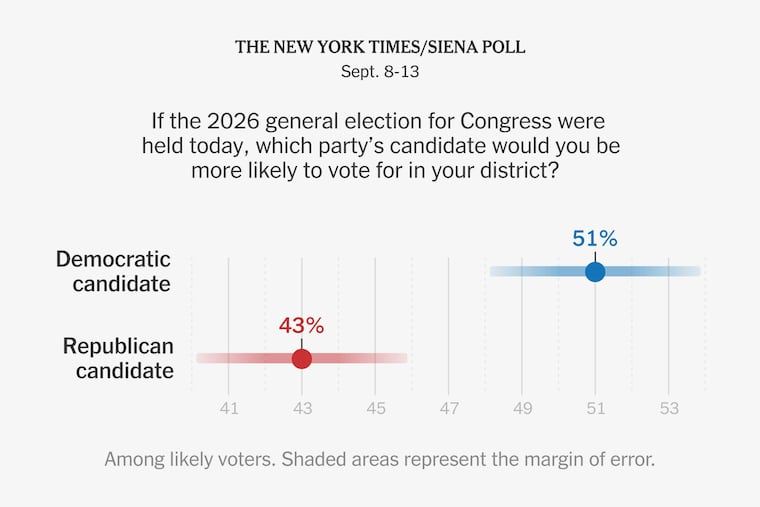
Polls consistently show most Americans oppose the war in Iran, which has raised energy costs and increased inflation. In July, more than 100 House Democrats voted to end all U.S. aid to Israel, signaling a historic shift in the party’s opposition to the country.
Republicans are more unified in their support for Israel, but a growing number of conservative commentators, including Megyn Kelly, Tucker Carlson, and Candace Owens, have questioned Washington’s steadfast backing and the $3.8 billion of aid the U.S. sends to Israel every year.
Besides the MK-84, the sale includes I-2000s, a penetrating bomb body used to attack hardened structures, and BLU-117s, a variant of the MK-84 that has thermal protective coating to make it safer for naval storage.