Appointment of top federal prosecutors in New Jersey was unconstitutional, judge rules
In a scathing opinion, U.S. District Judge Matthew Brann wrote that Trump’s administration has intentionally avoided taking the proper steps to appoint a top federal prosecutor in New Jersey.
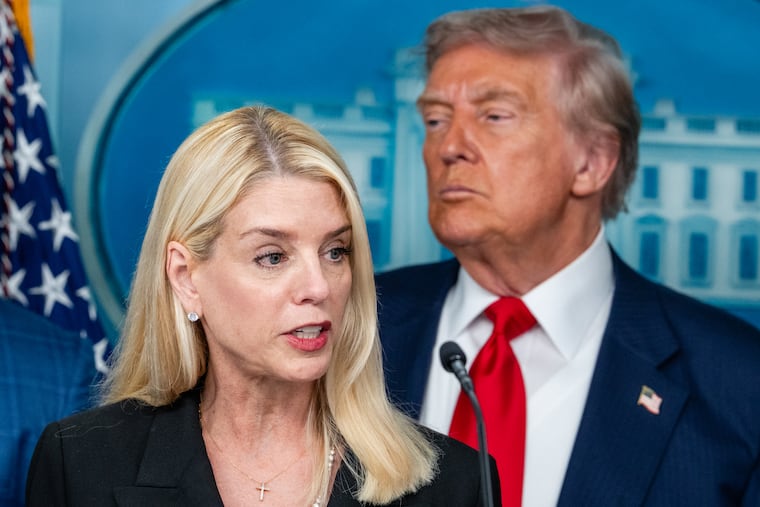
A federal judge on Monday ruled that President Donald Trump’s administration had acted “unlawfully” in appointing three new officials to lead the U.S. Attorney’s Office in New Jersey — the third time in seven months that judges have concluded the administration violated the Constitution while seeking to shape the leadership of that office.
In a scathing opinion, U.S. District Judge Matthew Brann wrote that Trump’s administration has intentionally avoided taking the proper steps to appoint a top federal prosecutor in New Jersey, including by failing to seek Congressional confirmation.
Instead, Brann wrote, administration officials have used novel legal maneuvers to contend that the Justice Department can install anyone it wants while effectively sidelining Congress and the judiciary — something Brann said amounts to “an enormous assertion of Presidential power.”
“One year into this administration, it is plain that President Trump and his top aides have chafed at the limits on their power set forth by law and the Constitution,” Brann wrote. “To avoid these roadblocks, this administration frequently purports to have discovered enormous grants of executive power hidden in the vagaries and silences of the code.”
Brann ruled that the current leadership structure — an unusual arrangement in which three lawyers oversee different aspects of the office — was imposed in an unlawful fashion and “requires disqualification” of the officials: Philip Lamparello, tasked with overseeing criminal cases; Jordan Fox, supervisor of civil matters; and Ari Fontecchio, head of the administrative division.
Still, Brann paused his decision — which was made as part of a challenge to two underlying criminal cases — to allow the government a chance to appeal.
The Justice Department did not immediately respond to a request for comment. But Alina Habba, a top aide to Attorney General Pam Bondi who was Trump’s first pick to serve as New Jersey’s U.S. Attorney — and who was disqualified from the role after Brann found that she, too, had been unlawfully appointed — said on social media that Brann’s decision was “another ridiculous ruling.”
“Judges may continue to try and stop President Trump from carrying out what the American people voted for, but we will not be deterred,” Habba wrote, later adding: “Judges do not fire DOJ officials, AG Pam Bondi and POTUS do — get in line.”
The saga is one of several instances in which the White House has sought to use similar complex legal machinations to install Trump loyalists in federal prosecutors’ offices, including California, Nevada, and New York. In Virginia, questions over the legality of a U.S. Attorney’s appointment played a role in sinking prosecutions against two of Trump’s political adversaries: former FBI Director James Comey, and New York Attorney General Letitia James.
The drama in New Jersey dates back to last March, when Trump named Habba, his former personal lawyer, as interim U.S. attorney for New Jersey.
The interim title allowed Habba to serve in the role for 120 days, but the administration attempted to keep her on without getting confirmation from the U.S. Senate. Her candidacy was likely to be rejected because she didn’t have support of Cory Booker and Andy Kim, the Democratic senators representing the state.
Brann disqualified Habba in August, and a three-judge panel of the Third Circuit Court of Appeals affirmed the decision in December. Habba stepped down a week later.
Bondi then replaced Habba with the leadership triumvirate, an approach that had never been used before in U.S. history.
Attorneys for one man who was convicted, Raheel Naviwala, and another who was awaiting trial, Daniel Torres, challenged the trio’s leadership. They argued the proceedings against their clients should be dismissed because of Habba’s involvement at first, and because of the triumvirate’s supervision after her resignation.
Brann in his Monday opinion declined to throw those cases out, but said the government’s unyielding approach to installing its desired leaders could have unintended consequences. And he warned that he might dismiss pending cases if the Trump administration again seeks to fill the top position in the office unlawfully.
“Why does the fate of thousands of criminal prosecutions in this District potentially rest on the legitimacy of an unprecedented and byzantine leadership structure?” he wrote. “The Government tells us: the President doesn’t like that he cannot simply appoint whomever he wants.”
Brann also said it was “crystal clear and not capable of factual dispute” that the government had been seeking to act unilaterally in installing its desired leaders.
Beyond being unlawful, Brann wrote, the approach, in his view, was unnecessary.
“As long as the President is willing to find compromise,” Brann wrote, “there is no reason that someone cannot always be performing the functions and duties of the office in complete conformity with the law.”

