Judge orders immediate release of ICE detainee who helped police investigate his daughter’s shooting death
Erasmo Zavala Almanza "suffered irreparable harm in his unlawful detention," U.S. District Judge Stephanie Haines said.
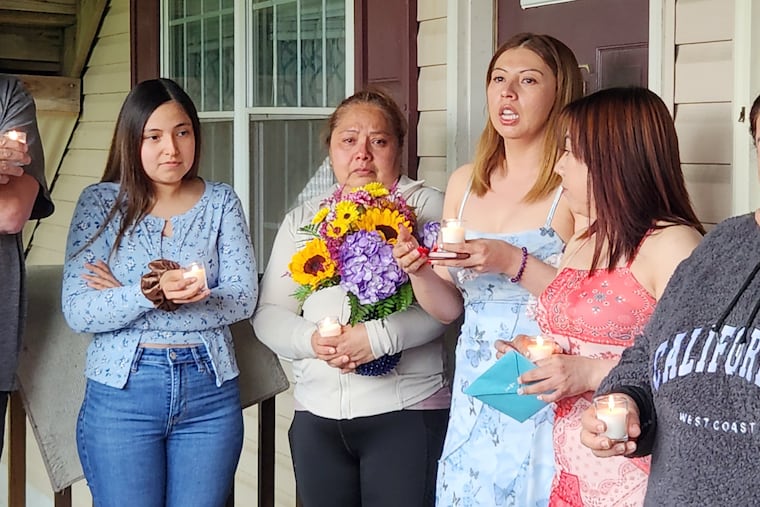
A federal judge has ordered the immediate release of an undocumented Mexican man who was arrested and detained by ICE after he helped Berks County authorities investigate the fatal shooting of his daughter.
Erasmo Zavala Almanza, 51, must be freed to return to his home in Muhlenberg Township, U.S. District Judge Stephanie Haines ruled on Friday. Before being arrested and confined last month, Zavala Almanza had been a primary caretaker for his baby granddaughter, who was critically wounded in the attack that killed her mother.
“Zavala Almanza has suffered irreparable harm in his unlawful detention since April 15, 2026,” the judge wrote in a decision on Friday. And his granddaughter, 2 months old when she was shot in the stomach, has been left “without a primary caretaker” due to his confinement, the judge wrote.
Zavala Almanza has been held at the Moshannon Valley Processing Center in Clearfield County, Pa., since ICE agents arrested him outside his home in Temple, Berks County.
He helped Berks County authorities as they investigated the February 2025 killing of his daughter, Selena Zavala Hernandez, 20, and the wounding of her baby, Selene Zavala Hernandez.
The mother and child, both U.S. citizens, were attacked by the baby’s father, 31-year-old Jesus Peñaloza Cruz, who then shot and killed himself, police said.
Haines, the judge, wrote on Friday that the public interest in having people step forward to help police investigate serious crimes “is weightier than the deportation of an illegal immigrant who has committed no violent crime, but has assisted in the investigation of one.”
The Berks County District Attorney’s Office certified Zavala Almanza to apply for a U visa, which if granted allows undocumented immigrants who assist the police to be placed on path to permanent residency in the United States. Zavala Almanza and his wife became the court-appointed guardians to their orphaned granddaughter.
Officials at ICE and the Department of Homeland Security did not respond to a request for comment on Friday.
Bridget Cambria, Zavala Almanza’s lawyer, said he would be released Friday afternoon. His family has arranged to travel to meet him at Moshannon, she added.
“The order is extraordinary, and the relief is extraordinary, because it is an extraordinary situation,” said Cambria, executive director of Aldea — the People’s Justice Center in Reading. “We’re happy he’s going home.”
The next step, she said, is to determine whether the federal government wishes to end the case now or proceed to trial.
The judge issued a preliminary injunction, which gives Zavala Almanza relief ― his freedom ― before a final decision, which could take months.
In granting the injunction, the judge said she weighed the public interest, potential hardship to the government, the harm to Zavala Almanza by continued detention, and the likelihood that he would ultimately win his release on the merits at trial.
Her ruling also ordered the government to set aside 2025 ICE guidance on U-visa applicants, under which the agency moved against Zavala Almanza, and consider his case under previous, longstanding protocols in which applicants like him were generally left alone.
The Trump administration changed ICE policy to dissuade agents from taking a “victim-centered approach” and lean toward arrest and deportation, the protocols show.
In the past, U.S. Immigration and Customs Enforcement generally would not arrest an immigrant who was pursuing a U visa. Instead, the agency would allow U.S. Citizenship and Immigration Services to first decide whether a U visa was warranted.
That’s no longer true. Zavala Almanza was arrested for immigration violations three months after the federal government received his application.
This month, however, USCIS issued a preliminary decision on his U visa case that granted Zavala Almanza “deferred action,” which typically allows people in his situation to legally stay in the United States for at least four years. He also received a work permit.
In court papers, Zavala Almanza said he and his wife settled in Pennsylvania after entering the United States without permission in March 2004. Years later, after they were stopped for a traffic violation, an Immigration Court judge granted the couple voluntary departure, which meant they could leave on their own.
Zavala Almanza acknowledged in court documents that he overstayed the December 2010 deadline before leaving. He recrossed into the United States in late 2015 or early 2016, followed by his wife.
The award of a U visa wipes away previous immigration violations.
