Martha Graham Cracker and Dito van Reigersberg were a gift to Philly
Up until Monday, if anyone were to ask me what made Philadelphia special — what the city had that no other did — one of the items on that list would be Martha Graham Cracker.
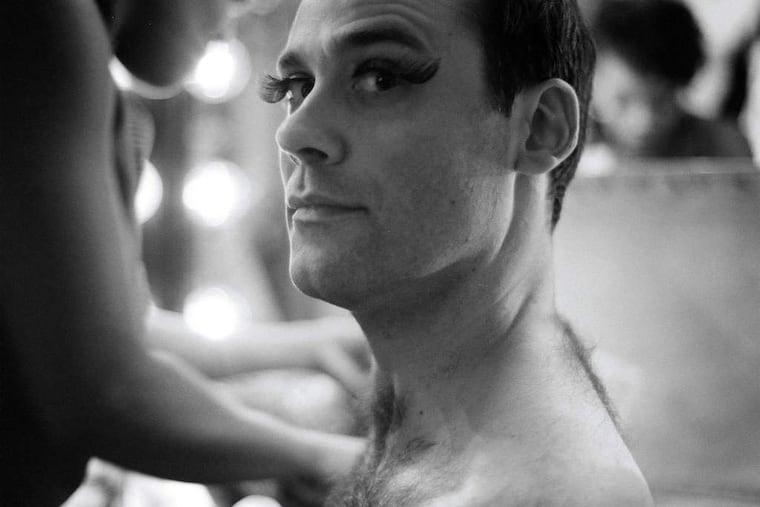
Oh, Martha. You’ve broken our hearts once again.
In the last 20 years of my life, the performer I have seen most often — by a wide margin — has been Martha Graham Cracker, the cabaret singer brought to life by local theater actor Dito van Reigersberg, who died Monday of leukemia at age 53.
Up until Monday, if anyone were to ask me what made Philadelphia special — what the city had that no other did — one of the items on that precious list would be Martha Graham Cracker. There was simply no one like her.
I can’t count how many times I lined up hours before showtime outside L’Etage, the upstairs club of the now-shuttered French bistro Beau Monde at Sixth and Bainbridge, all to get one of the few coveted seats for Martha’s cabaret act. I watched in wonder as she rearranged classic songs, taking music to places I never thought it could go. She had one of the best voices I’ve ever heard live.
But the music was only part of it. The real delight of Martha’s act was her personality.
Every few songs, she would teeter through the audience on massive heels (even though, at well over six feet tall, she didn’t need them), interacting with anyone who caught her eye. She would find the straightest man and make him blush as she sat on his lap, whispered secrets into his ear, and tickled his cheek with her false eyelashes as we all watched with envy. What a privilege it was to get picked by her.
[Editor’s note: In the above recording from the 2012 Christmas performance at L’Etage, the author can be seen seated inches from Martha at around the four-minute mark.]
Martha Graham Cracker was a perfect character, a just-right blend of strength and vulnerability, someone you could ache for, laugh with, and aspire to become in the same breath. Within the span of one song, she made you feel every emotion under the sun, switching from witty to profound to emotional.
But there was so much more to Dito than Martha.
I saw van Reigersberg for the first time in 2007, shortly after I moved back to Philadelphia after being away for more than 10 years. It was my home, but everything about the city felt different. Abandoned properties were being fixed up, innovative restaurants were opening their doors, and the art scene was exploding.
To be fair, I didn’t recognize the world anymore. My mother had died only months before, and I couldn’t understand how to live in a place without her in it. I walked the streets of this suddenly new city I’d known my whole life, feeling numb.
I wanted to love my city, my life again. So I said yes to every invitation I received, including from a high school friend who was going to see a show at the Philly Fringe Festival. I knew nothing about it.
Nearly 20 years later, I can still remember sitting stage right, watching the lights rise on a set that depicted a packed morgue, attended by one employee. And in the loneliness of being the only living person in a room of corpses, the character’s imagination brought each body back to life. One by one, the actors — including van Reigersberg — lifted creaky arms and legs off metal tables covered by white sheets, fighting rigor mortis to reenact Shakespeare’s Measure for Measure before the desperate eyes of the hospital worker.
I was mesmerized. (Not just because every former corpse, true to the setting, was nude for the entire play.) To me, this was art unlike anything I’d ever seen before. And for the first time in months, I could feel again — wonder, joy, beauty. How lucky I felt, to be alive, to be in Philadelphia, where I could see something so astonishing.
After that, I searched out Dito and Martha every chance I could get. I attended the benefit cabarets at the Trocadero at 10th and Arch for the Pig Iron Theatre Co., which van Reigersberg cofounded. I saw him perform as Hedwig in Azuka Theatre’s 2008 production of Hedwig and the Angry Inch, presented at the Latvian Society at Seventh and Spring Garden (“When the German Society [one block away] won’t have you,” van Reigersberg added to the script).
When I got pregnant in 2013 and felt like I’d never be able to go out again, I knew I couldn’t end this part of my life without a final Martha show, and I squeezed my massive belly into a corner of L’Etage and stood for three hours. My feet screamed at me, but I was exhilarated. The Martha Graham Cracker cabaret captured all of life’s emotions into one set, and I needed to feel it all one last time.
Of course, I didn’t stop going to see Martha after my daughter was born. I stood front row at Martha’s 12th anniversary party at the Trocadero, went to every L’Etage show I could, and cried when I couldn’t get a ticket to her 2016 tribute to Prince at the TLA before it sold out.
And when Martha did a daytime show for kids, I dragged my daughter through a winter blizzard to Old City so she could experience it for herself. I remember the effort it took to get there — the snowsuits, scarves, lined boots — and thought about the people who spent so much energy to protest Drag Story Hour.
I probably put more work into getting my daughter in front of Martha Graham Cracker than protesters did to make their signs and scream themselves hoarse to stop families from going into a library. That’s how important Martha was to me. My daughter needed to see this act I’d loved for so long, so she could witness life in all its nuances and forms. Look at this, I wanted to tell her. Listen to this.
At that kids’ show, Martha sang “Maybe” from the musical Annie, and it was as if I’d heard the song for the first time — the hope, the longing, the joy of it. For at least a year afterward, if someone asked my daughter who her favorite musical artist was, she said, “Martha Graham Cracker.”
No other city had that. No other city had Dito van Reigersberg and Martha Graham Cracker the way we did. How lucky were we?
Alison McCook is a former reporter and editor at The Inquirer.