Letters to the Editor | June 5, 2026
Inquirer readers on a delayed investment in South Philadelphia’s shipyard and the environmental effects of relaxed rules on refrigerant emissions.
Promises still pending
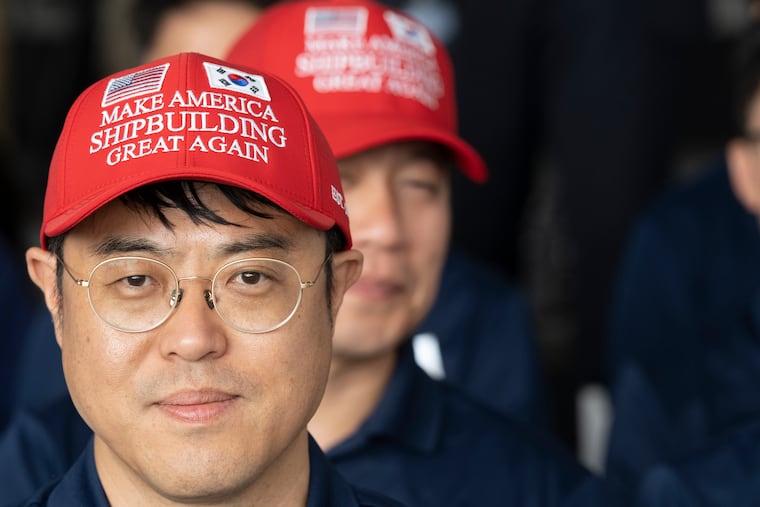
Last August, Sen. Dave McCormick made an announcement that he applauded Hanwha’s historic $5 billion investment in the South Philadelphia shipyard and thanked President Donald Trump for his strong leadership on the issue. This investment would modernize the facility by automating welding and digitizing the huge steel plates used to assemble the ships. Ten months later, the U.S. and Hanwha have yet to reach an agreement on the levels of funding for the planned modernization of the Navy Yard.
Our nation has spent as much as $50 billion on an as-yet unfinished war with Iran. But in South Philly, they’re still waiting.
Greg Nowell, Narberth
Trump’s cold case
Does Donald Trump have the slightest understanding of what hydrofluorocarbon refrigerants really do, or how they are used? They are not expendables like gasoline or natural gas that get used up during normal operation, but are loaded into a chiller, refrigerator, freezer, or air conditioner at the time of manufacture or installation. Barring leaks, damage, or recycling, they stay there. The president relaxed the rules around refrigerant emissions for grocery stores and air-conditioning companies, moves the administration says will help lower the price of groceries. The cost of the refrigerant is a trivial percentage of the cost of the equipment, and an even more trivial percentage of the overall cost of running a grocery store. However, the effect on the environment of those emissions that do escape is huge. In short, Trump has been sold a bill of goods by his industry cronies.
Sam Goldwasser, Bala Cynwyd
Shame or celebration
I love this country. I have traveled to all 50 states. I named our daughter Amber, and I hear “waves of grain” when I look at her. But as a health professional for 50 years, I have trouble getting in the mood for America’s 250th anniversary.
The Trump administration has crippled healthcare policy. Thousands of our Pennsylvania neighbors are losing their health insurance and/or delaying needed care because of soaring costs. Measles is making a comeback.
Our decimated public health system is begging for volunteers to screen for the Ebola virus. Trump’s reaction: the old blame the victim game — building an Americans-only treatment tent in Kenya.
Once, we would have led the way to send help and resources — but now we have no vaccine or prevention medication for the volatile hantavirus. Our secretary of Health and Human Services is a joke, wrestling with snakes.
Nurses like me are still grieving for our colleague Alex Pretti, a hero who died at the hands of U.S. Immigration and Customs Enforcement agents in Minnesota as he defended the vulnerable.
There is the shame of the conditions in ICE’s detention centers in Clearfield County, Pa., and at Delaney Hall in New Jersey. Sitting U.S. senators are pepper-sprayed or thrown to the ground and handcuffed for wanting to know how their constituents are being treated in these places. The governor of New Jersey, for God’s sake, is denied entrance to a for-profit facility under a government contract.
Shame on all of us for tolerating this insanity. This is a serious blight on our nation’s history, one that in years past took pride in the words inscribed on the Statue of Liberty’s pedestal: “‘Give me your tired, your poor ... The wretched refuse of your teeming shore. ... I lift my lamp beside the golden door!’”
I want to believe in Bruce Springsteen’s “The Land of Hope and Dreams” tour. But events today make us wonder if any hopes and dreams remain alive for many Americans.
Pat Ford-Roegner, Glen Mills
Join the conversation: Send letters to letters@inquirer.com. Limit length to 150 words and include home address and day and evening phone number. Letters run in The Inquirer six days a week on the editorial pages and online.