"Drank" relaxation beverage expands market
Peter Bianchi observed a country in panic mode as the economy crumbled last year and saw an opportunity for the soothing beverage he'd created.
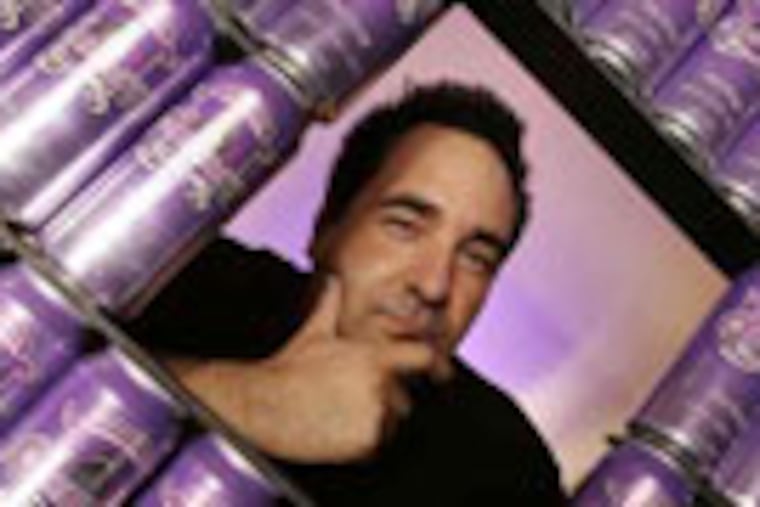
Peter Bianchi observed a country in panic mode as the economy crumbled last year and saw an opportunity for the soothing beverage he'd created.
Bianchi, 40, chief executive officer of a Houston beverage distributor moonlighting as a drummer, said he devised the drink, which he dubbed "drank," to calm himself after a stressful day before manning the skins at night gigs.
But he soon realized his "extreme relaxation beverage" was a grape-flavored way to quench financial anxiety.
It is an antidote to the caffeine-stuffed energy drinks: "What goes up, must come down," Bianchi says. Containing valerian root, rose hips, and melatonin, drank (lower case, the company prefers) helps consumers unwind.
"I think the timing is right with the economy," he said. "People are more stressed out about their finances; this is a good alternative to running to the liquor store to sedate themselves."
Drank wants to "slow your roll," to use its slogan. "The product was my quest to relax the world," Bianchi said.
After its soft launch in early 2008, the drink began spreading throughout the South from its headquarters in Houston. In April, a deal was struck for nationwide placement in 7-Eleven stores.
Earlier this month came an announcement that Pennsauken-based Canada Dry Delaware Valley and its Potomac-area affiliate had inked the drink's largest partnership to date, potentially doubling its distribution. It is to be on shelves throughout the Mid-Atlantic alongside other Canada Dry products such as Arizona teas and Snapple.
The deal promises distribution for drank - produced in Tennessee and Minnesota - throughout South Jersey and eastern Pennsylvania, and down into Delaware, Maryland, Virginia, and Washington, D.C.
The idea to turn the Red Bull frenzy on its ear has brought the drink attention - and controversy.
Pointing out drank's name, purple color, and slogan, Adam Mansbach, a novelist and visiting professor at Rutgers University-Camden teaching a class on hip-hop, noted a similarity between the product and a street drink long popular in Houston's rap culture known as "purple drank," "lean," or "sizzurp." That concoction is made by combining soda with grape-flavored prescription cough syrup containing codeine and promethazine.
"It sounds like an attempt to market something that is a legal, milder knockoff of the cough syrup-codeine drink that folks are drinking down South," he said, adding that the street drink's mellow high has spawned its own musical genre in Houston known as "chopped and screwed," in which rap beats are slower.
The cough-syrup drink has been glorified by artists such as Lil Wayne, and the connection with drank would likely be made by "anyone who's in tune with youth culture or hip-hop," Mansbach said.
In the last 18 months or so, said Doug Collier, spokesman for New Jersey's Drug Enforcement Administration, cough-syrup drinks in local schools have become the subject of discussions with drug-prevention officials.
"That's one of the trends that's surfaced," he said. Throughout New Jersey, reports have popped up of students - often in middle school - sitting in class and sipping soda that has been mixed with cough syrup or Robitussin taken from home medicine cabinets.
But Bianchi and his head of distribution, Terry Harris, insist they had no idea such a drink existed. Their use of "drank" is as a celebratory word for drink, they say, and the other similarities are merely coincidental.
"We weren't even aware of "sizzurp," or whatever that is, until they brought it to our attention, until the media made us aware of it," Harris said.
Matt Sonzala, who booked hip-hop shows in Houston for more than a decade and now helps organize Austin music festival South by Southwest, has been a fan of drank since it first came out.
"They try to play it off, but they definitely played on the real term," he said of drank's alleged namesake. "There's no denying that."
Though the local distributors did not respond to requests for comment on the product, John Tagliente, vice president of sales and marketing for Canada Dry's Delaware Valley and Potomac divisions, referred to drank as a "pop-culture phenomenon" in a news release announcing the distribution partnership.
"This original concept is gaining significant consumer acceptance and will become a huge success in all of our markets and a solid profit generator for the retailers," he said. Figures provided by drank show $1.6 million in second-quarter revenue, up 26 percent from the first quarter.
To give the drank drinker a feeling of "extreme relaxation," each can has 2 milligrams of melatonin and 10 milligrams of valerian root, Harris said. A notice on the can tells drinkers to limit themselves to two servings per day. Each 16-ounce can is two servings.
Valerian root and rose hips are approved by the Food and Drug Administration, but melatonin, a natural supplement often used to treat insomnia, has not been approved for use in food or drink.
"The FDA is not aware of a basis to conclude that its use in food is [generally regarded as safe]," the agency wrote in a statement.
Drank can put its product on the market without FDA approval, agency spokesman Michael Herndon said, but the company is "risking its reputation" if it has any harmful effects on consumers.
Fred Jaffe, assistant professor of medicine at Temple's Sleep Disorders Center, said he was reluctant to recommend melatonin because of a lack of FDA oversight and of research on its effects.
He said the body naturally produces about 0.3 milligrams of melatonin to help people sleep at night, and anything more is "over what the body really needs."
But Bianchi said everything in his drink was safe. "Everything we use in the product itself you can go to your GNC and pick up," he said.
Herndon would not say if the agency planned to investigate drank's use of melatonin. "I would say that we would be interested," Herndon said.
Amid the controversy, Bianchi is undeterred as he takes on the Northeast market.
"I think everybody should be receptive to relaxation," he said.