Failed attempt at explaining Bergman's genius
If you can paraphrase the philosophical content of a movie, what's unique about delivering it through film? If you can't, what makes the movie "philosophical" - a term that indicates reasoned argument in words about profound topics?
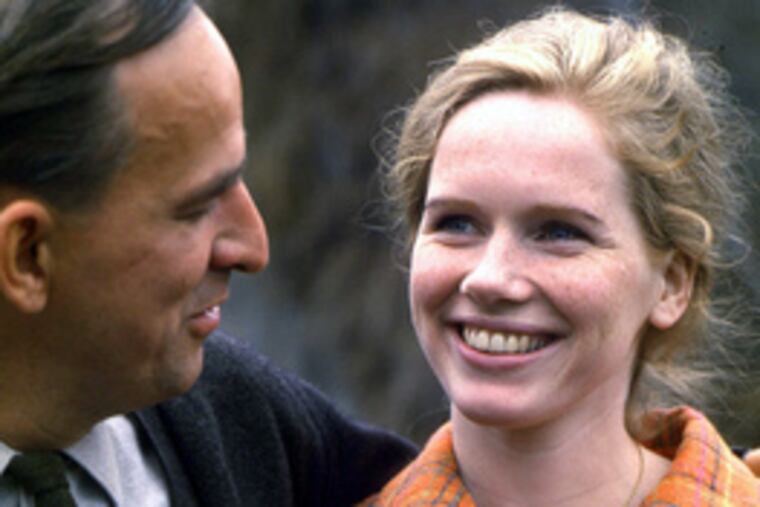
nolead begins By Irving Singer
MIT Press. 243 pp. $24.95
nolead ends If you can paraphrase the philosophical content of a movie, what's unique about delivering it through film?
If you can't, what makes the movie "philosophical" - a term that indicates reasoned argument in words about profound topics?
That paradox, articulated by the sublimely named philosopher of film Paisley Livingston, lurks behind the aesthetic uncertainties in many pieces marking the death last week of the great Swedish director Ingmar Bergman.
Some commentators cited Bergman as a "poet of the cinema," and therefore philosophical.
Yet poetry raises questions similar to those provoked by film. Does poetry as a genre contribute anything distinctive to philosophy? Can a poem be philosophical if it's not a set of propositional claims and arguments (as few poems are)?
One possible retort: Exactly who decided that only "propositional prose" counts as bona fide philosophy? Anybody remember Plato's dialogues?
Irving Singer's Ingmar Bergman, Cinematic Philosopher, originally scheduled for October but now being rushed to bookstores by MIT, would seem to arrive as a possible lifeline. Can it help us understand what made the brooding, introspective Swede an obvious choice for his country's first Nobel Prize for Cinema (had the staid Nobel Foundation ever established one)?
Bergman's 1950s masterpieces such as The Seventh Seal and Wild Strawberries indisputably helped lift the medium of film to the status of an art form. But that fact merely returns us to the same possibly circular dilemma: Does producing serious work in a recognized art form mean you're a philosopher?
To assess whether Bergman fits into the toga provided by Singer, an MIT philosophy professor who specializes in Santayana, love and this vein of lauding directors - see Three Philosophical Filmmakers: Hitchcock, Welles, Renoir (MIT, 2004) - some context is needed.
First, even though the "art-house film" that gripped sophisticated American and European youth in the 1950s and '60s gave way to the successor coolness of Net media and video games, heavy-think on movies by philosophers and other academics continues to expand.
Academics abhor a nonphilosopher artist the way nature abhors a vacuum. He or she leaves them with nothing to say - or paraphrase. Give the scholar a magnificent imagist like Bergman - Death playing chess with the knight in The Seventh Seal, or the hand rising out of the coffin in Wild Strawberries - and imputing "philosophical" to the artist is a no-brainer.
Second, most philosophers of film these days - look at the Winter 2006 "Thinking Through Cinema" issue of The Journal of Aesthetics and Art Criticism published by Temple University - ask shrewd, nuanced questions about the nexus of philosophy and film.
Does the auteur theory of filmmaking, for instance, which posits the film's director as its singular creative force, make sense in a collaborative art? (How much credit for Bergman's classics, you might ask, goes to Sven Nykvist, his stellar cinematographer? None?)
Finally, a striking feature of philosophy of film has been the focus of scholars not on auteur art movies, but on mainstream films, a bent partly spurred by Harvard philosopher Stanley Cavell's influential work on 1930s Hollywood comedies. (Cavell viewed Capra's It Happened One Night through the prism of Kant's Critique of Pure Reason.)
Against this background, Singer's rambling ruminations about Bergman disappoint.
Singer has done his homework and chomped his popcorn, showing great familiarity with Bergman's films, interviews and writings. Yet he never convinces us that Bergman is "philosophical" in his "expanded use of this term." Singer's articulations of that point are airy: Great films "are philosophical insofar as the meaningfulness they embody, and the techniques that convey their type of meaningfulness, exploit at a significantly deep level the visual, literary, and sonic dimensions of this art form."
In fact, much of Singer's evidence undermines his promotion of Bergman as a "kindred spirit." Whereas Bergman mesmerizes with startling images, Singer writes like a filmmaker who prints the sloppy first take: "Bergman's films are outstanding because they succeed in directing our attention to ideas and problematic feelings that both his narratives and the images that manifest them portray as the reality of what human nature is."
Bergman himself attributed the ideas for his films to "the pressures of the spirit," the horrors of his painful childhood with a stern Lutheran father and mother whom he loved desperately - not to any theoretic interest in family relationships. He saw himself, Singer acknowledges, as "a craftsman" making useful objects with which others might solve their problems.
Oddly for a "cinematic philosopher," Bergman in his memoirs several times savaged his early films for their falseness. The Virgin Spring presented "a totally unanalyzed idea of God." Through a Glass Darkly reeked of "gross unveracity."
Most film critics thus rightly emphasize the autobiographical, psychotherapeutic core of Bergman's films, the upshot of the director's self-confessed neurotic approach to family life (five marriages, nine children, little parenting).
Bergman emphasized how his films emerged from images. He said they grew "like a snowball, very gradually from a single flake of snow." His genius, to the eye of many, remains taut fashioning of brilliant scenes that provide occasions for philosophizing - they're not forms of philosophizing themselves.
Ultimately, Singer ignores in both title and text the perplexing issue about all art raised by Arthur Danto, America's foremost philosopher of art. Is it what critics say abuiot art that makes it philosophical, rather than what artists seek to communicate?
"There are no symbols in my pictures," Bergman once declared. "What I hate most of all in art is the self-conscious symbol. . . ."
There's greatness in those pictures, but not because Bergman, who wanted to touch people rather than persuade them, looked in the mirror and saw Soren Kierkegaard.