'Wadjda' a pioneering film
FOR A FILM that's as simple and sweet as a child's kiss, "Wadjda" is revolutionary.
FOR A FILM that's as simple and sweet as a child's kiss, "Wadjda" is revolutionary.
It's believed to be the first movie shot entirely in Saudi Arabia and the first film made in the country by a woman. That's quite a feat in a nation where movie theaters are banned, and sexual segregation is the norm. That "Wadjda" has survived such obstacles to become a film-festival favorite and the country's first submission for Oscar consideration is a testament to director Haifaa Al-Mansour's determination.
But all of that wouldn't mean as much if "Wadjda" (pronounced Waj-da) weren't very good. The film is deserving of its position as a pioneer. It's a heartfelt, touching peek into the day-to-day life of a culture Westerners rarely get to see.
Wadjda (a captivating Waad Mohammed) is a young girl living in Riyadh who already feels smothered by her country's religious traditionalism. Much to the consternation of her teacher, she wears sneakers under her robe and, much to her mom's dismay, she blares Western pop music on her radio.
Worst of all, more than anything, she wants to buy a bike so she can beat a neighborhood boy, Abdullah (Abdullrahman Al Gohani), in a race. Such a goal is not allowed for girls, though the government recently liberalized these prohibitions.
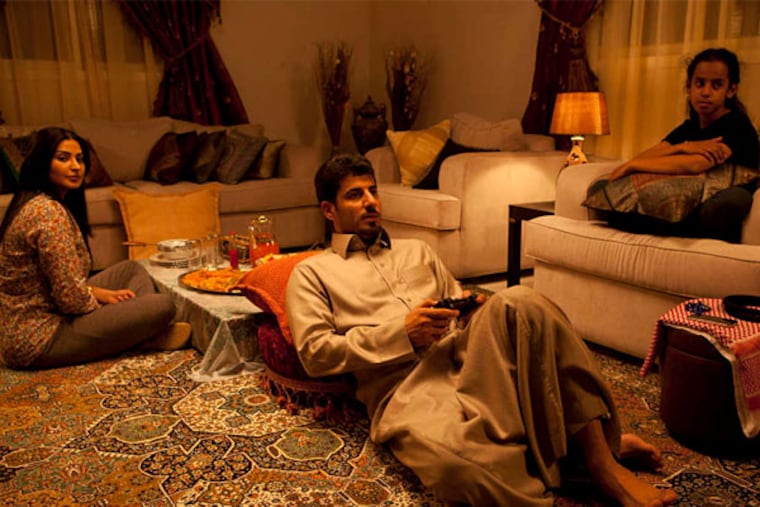
Wadjda's plotting to get her bike is set against the backdrop of the quiet desperation of her home life, where her mother (Reem Abdullah) agonizes over whether Wadjda's father (Sultan Al Assaf), who really wants a son, is dissatisfied enough to take a second wife.
If "Wadjda" is any guide, it all bodes well not only for the future of a nascent Saudi Arabian film industry but for women navigating their way through Saudi society.