The Iran war is costing taxpayers up to $3 billion per month as Democrats make it a top campaign issue in Pa. districts
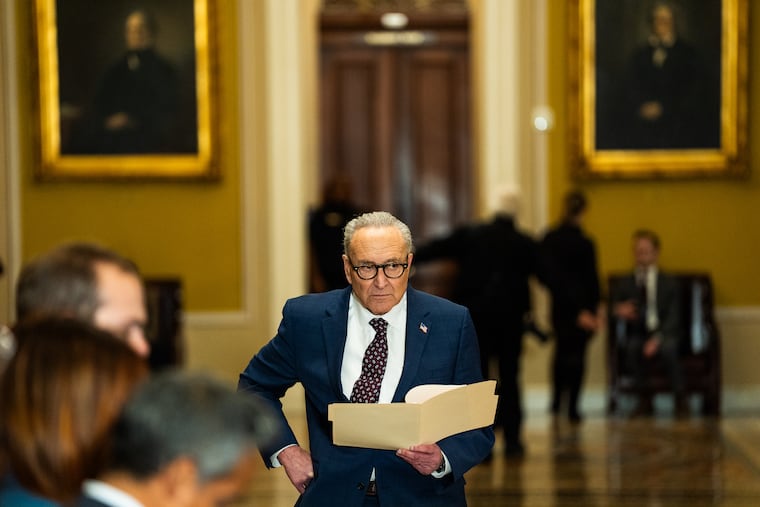
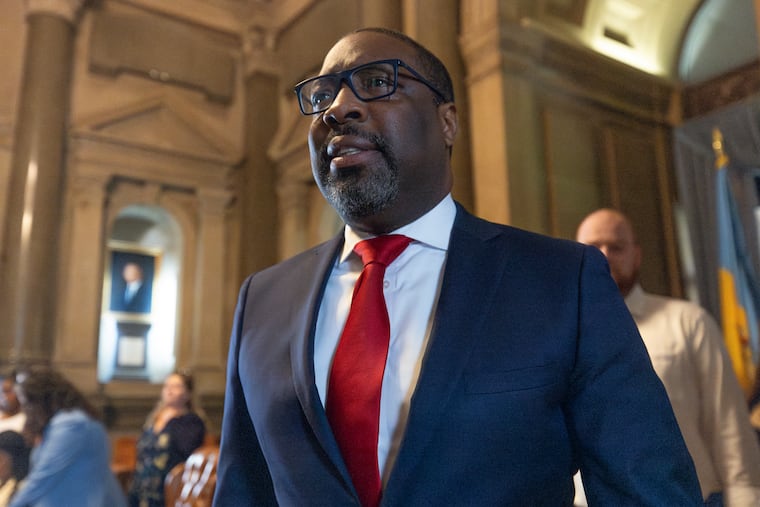
A new CBO report, requested by Philly Democratic Rep. Brendan Boyle, reveals the cost of the Iran war, an issue that is reverberating with voters in Pennsylvania.
WASHINGTON — The war in Iran is costing the United States up to $3 billion per month and has tallied more than $38 billion in direct costs to the government since it began more than six months ago and became a flash point in voters’ frustrations over rising prices, according to a new and nonpartisan analysis.
The estimate, released Tuesday by the Congressional Budget Office after a request from U.S. Rep. Brendan Boyle (D., Philadelphia), mostly represents munitions expenses as of Aug. 1. It does not include some other direct and indirect costs — such as the spike in gas prices felt by consumers — that likely make the total price tag for Americans far higher.
But with the war on the minds of voters during the midterm elections this fall, the latest tally is the one of the clearest signs yet of the conflict’s impact on taxpayers.
“It is now concrete evidence that when the administration was pretending like there wasn’t going to be a real cost to this war, they were wrong,” Boyle said in an interview Tuesday. “We have now paid $40 billion, and climbing, on the most reckless decision to go to war of at least my lifetime. So as the people go to the polls this November, they need to recognize that if they are voting for the president’s party, they’re voting for more of this.”
The top Democrat on the House Budget Committee, Boyle requested the analysis in the first days of the conflict — when President Donald Trump said the campaign would last four or five weeks. The president and his allies said the goals were to root out Iran’s regime and to dismantle its capacity to build a nuclear weapon.
Democrats and other critics warned of a reckless and potentially yearslong conflict.
Trying to win control of Congress for the final two years of Trump’s term, they have largely framed their opposition to the war around the economic consequences — marrying an affordability message around rising healthcare and grocery costs with one about gas prices, which they say are even more directly connected to Trump’s actions.
Polls and interviews show that message could have an impact in the midterm elections this fall. In Pennsylvania, voters in four key battleground districts will decide whether to keep their Republican members of Congress, each of whom has supported the war to varying degrees.
“This mess must stop,” Uber driver Miguel Vazquez, 60, of Allentown, said last week while filling up his 2021 Mitsubishi Outlander with $4.53-per-gallon fuel.
The price of gas has remained elevated and has increased in recent weeks as fighting continues in the oil-rich region. On Tuesday, the average cost of a gallon of gas was $4.50 in Pennsylvania and $4.33 nationally.
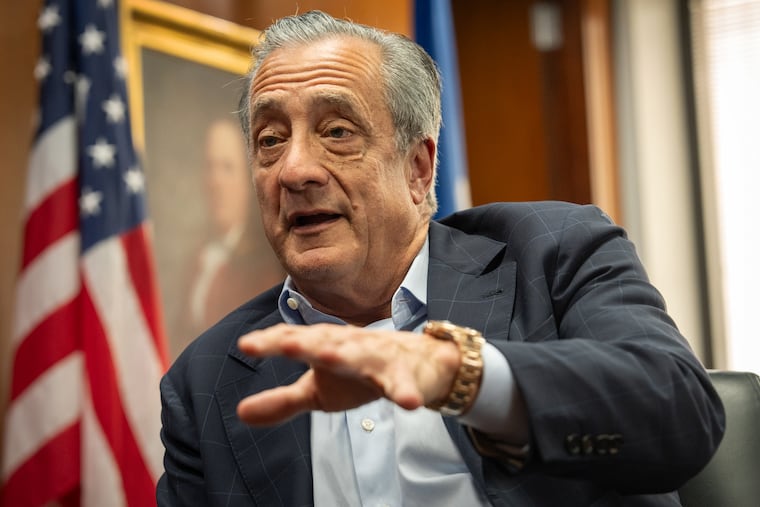
The war in Iran and tariffs have made daily living and working “a nightmare” that can be fixed only by “regime change,” Vazquez said. He said he plans to vote for Democrat Bob Brooks, a challenger to freshman Republican U.S. Rep. Ryan Mackenzie, who represents a swing district that covers the Lehigh Valley and the Poconos.
“The [Republican] Party listens to Trump, who put us in Iran and set tariffs — making gas, food, and everything else expensive,” said Vazquez, a Democrat. “They have to go.”
The cost of war
The report from the Congressional Budget Office, where nonpartisan staffers analyze federal policy for lawmakers on both sides of the aisle, largely aligns with other estimates of the war’s costs so far.
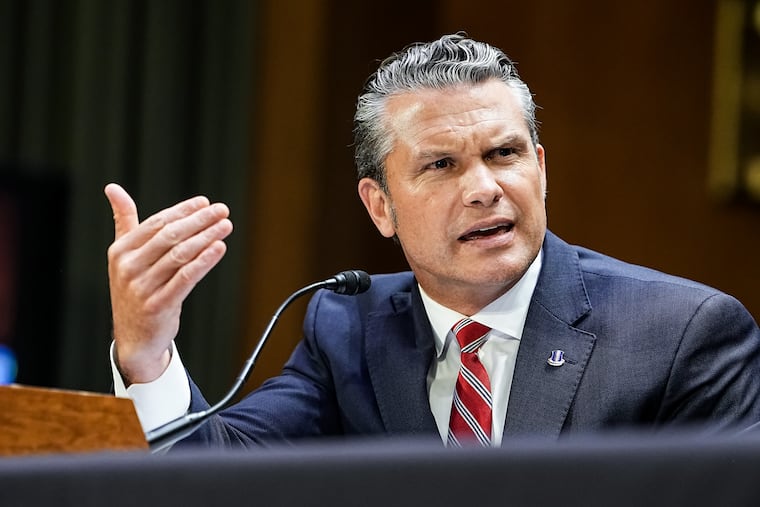
The nearly $38.1 billion in direct costs as of Aug. 1 is slightly more than the $37.5 billion figure that Defense Secretary Pete Hegseth noted during congressional testimony in late July.
The CBO’s estimate includes $21.7 billion to replace expended munitions, $10.4 billion for additional flying hours — which refers to the cost of the military’s deployment of aircraft in the region — and $2.7 billion due to higher fuel prices. The agency was unable to determine other costs, like the damage to U.S. facilities in the region or expenses related to diplomatic operations and foreign aid.
The overall price tag also does not include indirect costs that affect the U.S., such as inflation and interest rates — though it notes that both are impacted by the war. For instance, year-over-year inflation is expected to be 0.5 percentage points higher in the first quarter of 2027 because of the war.
Independent analysts have noted those indirect costs are significant.
An “Iran war energy cost tracker” from Brown University’s Watson School of International and Public Affairs shows that consumers have felt the brunt of nearly $107 billion in additional gasoline and diesel costs since the start of the war.
Mark Zandi, the chief economist at Moody’s Analytics, who is based in Chester County, in June pegged the cost at $1,000 for a typical American household. The war has also fueled inflation and led to expectations that the Federal Reserve will raise interest rates this year instead of cutting them, he has said.
“The net effect of the Iranian conflict on U.S. economic output is unclear at this time,” the CBO report states. “Higher prices erode the purchasing power of U.S. households and businesses, dampening consumption and investment growth. Conversely, supply disruptions increase demand for U.S. energy exports, spurring additional domestic energy production.”
According to the analysis — for which the Pentagon did not provide information — it will “probably take at least five years” to replenish the significantly depleted weapons stockpile.
“The shortfall would become especially problematic if a conflict arose with an opponent whose arsenal included large numbers of ballistic and cruise missiles,” the report states, adding that China maintains an arsenal that “would probably play a major role in a military conflict involving Taiwan.”
The CBO report states that while the ongoing costs of the war are difficult to estimate, the U.S. military action is costing between $2 billion and $3 billion per month, depending on the level of hostilities.
Fighting in recent weeks has included U.S. Central Command destroying five Iranian crude oil carriers after the Islamic Revolutionary Guard Corps targeted a U.S. Navy ship with ballistic missiles, Central Command announced last week. Eighteen U.S. service members have died in the war and several hundred have been wounded.
Election messaging
Boyle, who represents a safe Democratic district, has taken a leading role in helping craft his party’s response to Trump’s economic policies, including the president’s signature tax-cut bill in 2025 and the expiration of healthcare subsidies at the beginning of this year.
When Trump unilaterally decided to join Israel in attacking Iran on Feb. 28, Boyle joined other Democrats in quickly denouncing the move and adding it to their list of economic grievances.
Candidates challenging Republican incumbents in Pennsylvania have taken a similar tack.
“Six months in, nobody in Washington is treating Iran like the emergency it is for families here,” Democrat Janelle Stelson, who is challenging Republican U.S. Rep. Scott Perry in a Harrisburg-based district, said in a video at a gas station on the six-month anniversary of the conflict.
Perry, a hard-line conservative from York County, has supported Trump in his war efforts, while Stelson blamed him for the “astronomical” increase in gas prices.
Perry has voted against Democratic-led war powers resolutions aimed at restricting Trump’s actions in Iran. Mackenzie and U.S. Rep. Rob Bresnahan (R., Luzerne), who are also running in competitive districts that could ultimately determine which party controls the House, have also voted against them.
U.S. Rep. Brian Fitzpatrick (R., Bucks), another vulnerable incumbent in a battleground seat, initially supported the war but broke with his party to help Democrats pass a war powers resolution in June.
Pennsylvania’s U.S. senators, Democrat John Fetterman and Republican Dave McCormick, have also both supported the war, rejecting war powers resolutions multiple times.
U.S. Sen. Andy Kim (D., N.J.), who worked on national security issues in the Middle East before entering Congress in 2019, called the $38 billion cost “an unfathomable amount.”
“[E]very family has paid money from their own wallets to fund Trump’s war,” Kim wrote on social media.
On the campaign trail, Republicans have largely refrained from commenting on the war as they seek to retain control of the House and Senate.
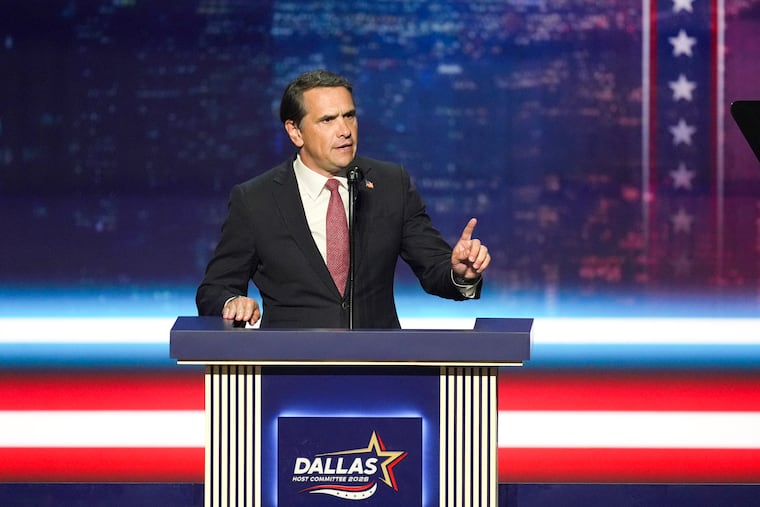
At the first-ever Republican midterm convention in Dallas last week, dozens of speakers — including Mackenzie, Bresnahan, and McCormick — did not address the largest-scale U.S. military engagement in the Middle East since the wars in Iraq and Afghanistan.
Vice President JD Vance’s speech appeared to briefly refer to the disagreements around the war. While talking about Charlie Kirk, the conservative activist killed last year, Vance urged voters not to reject Republicans just because they do not agree with them “on every single issue,” like wars.
“He just hated war. That was his view,” Vance said of Kirk. “Now, of course, there are people who love what we’ve done and people who don’t. I’m not here to litigate the disagreements between Charlie and some of the people that he disagreed with. But what I’m asking you to do is do what Charlie did. Do not throw the baby out with the bathwater. Don’t give the country over to a bunch of crazy people because you happen to disagree with us on a policy issue here or there.”
Polls have shown widespread disagreement with Trump over the war. An Inquirer/New York Times/Siena University poll of likely Pennsylvania voters in August found that 30% of Trump’s 2024 voters and 66% of all voters disapproved of his handling of Iran — the most of any issue asked about in the survey. A national poll from the New York Times and Siena University published Tuesday similarly found two-thirds of likely U.S. voters, and three-quarters of independent voters, disapproved of the war.
“I don’t see a reason to be there and pushing up gas prices,” said three-time Trump voter Greg Kerrick, 58, of Scranton.
Kerrick said that the president was “mostly doing all right” and that he was supporting Bresnahan, the Republican incumbent, for reelection in the swing district. But he disagreed with the war.
“I don’t drive but I feel for all the people paying $4.30 or whatever a gallon,” Kerrick said.
Charles Grasty, 66, of Dickson City in Lackawanna County, said his objection to the war was on moral grounds. The Republican voter said the conflict feels like a grab for oil from Iran’s massive reserves.
“We are literally trying to take stuff that belongs to other people,” said Grasty, who works for a fabric-manufacturing company near Scranton. “I’m a Christian and I’ve been taught you can’t bully people like that. We have to stay off their soil.”
Boyle said the conflict is historically unpopular, based on consistent and strong opposition in polls since it began. The CBO report, he said, shows that part of the reason is the growing costs.
“Americans are essentially paying for this twice,” Boyle said. “They’re paying for it directly through tens of billions of dollars of taxpayer money that is going to fund the war. But then they’re paying for it a second time in terms of increased costs at the pump, increased costs at grocery stores, and increased costs for consumer goods.”