Fewer motorists are dying in Philadelphia traffic crashes, but peril remains for pedestrians and cyclists
A majority, or 55%, of people killed in Philadelphia traffic crashes last year were pedestrians, cyclists and other non-motorists, the analysis found.
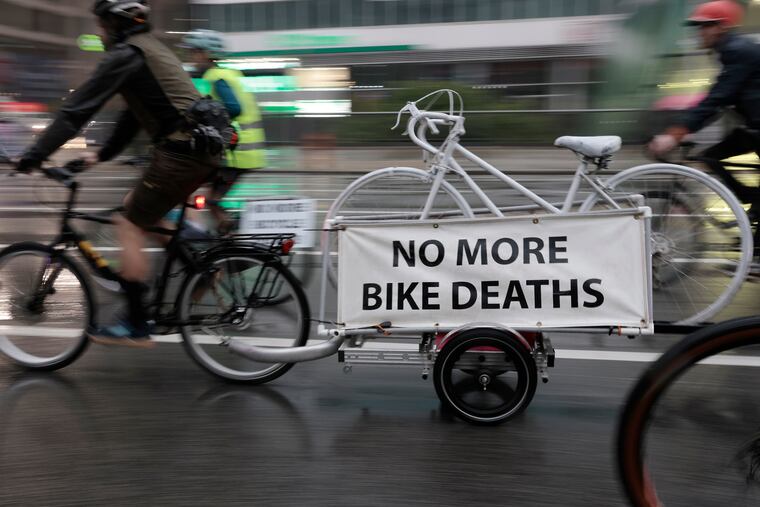
Pennsylvania reached a safety landmark last year as fewer people were killed in traffic crashes than at any time since 1928, when the state began keeping records, PennDot said last week.
It was noteworthy, but an examination of the data for Philadelphia by Philly Bike Action, a grassroots advocacy group, showed a more unsettling picture for pedestrians and cyclists on city streets.
Last year, a record 55% of people killed in city traffic crashes were non-motorists, based on PennDot’s updated figures. A majority of the serious injuries on Philadelphia streets, 52%, happened when drivers hit someone outside of a car.
From 2020 through 2025, overall crashes have declined in Philadelphia, even as crashes involving non-motorists have stayed the same or increased, the group concluded.
State reporting categorizes crashes as involving drivers and passengers in motor vehicles or non-motorists. The latter includes victims who were walking, riding bikes or scooters or using wheelchairs when they were hit by a driver.
PennDot said 1,074 people statewide were killed in traffic crashes in 2025, the fewest on record. Transportation Secretary Mike Carroll said that was good news but “even one life lost is one too many.”
Philly Bike Action released its findings Wednesday. Crashes on interstates through the city were excluded because what happens on roads and state-maintained highways in the city is more relevant to assessing experiences of pedestrians and cyclists, said Jacob Russell, the group organizer who did the review.
“We see a big decrease in the number of fatalities among people inside of vehicles, which is great, really impressive,” Russell said. “But when you look at the non-motorist crashes, you see essentially no change.”
In 2020, the year of coronavirus pandemic shutdowns, dangerous driving behaviors like speeding and crashes jumped in Philadelphia and other U.S. cities. The trend has been slow to recede.
It is unclear what is driving improvement among motorists, whether enforcement and improved road design or vehicle safety features.
“If PennDot and the City of Philadelphia want to see real improvement in pedestrian and bicycle safety, they need to adopt widespread traffic calming measures with strong physical barriers,” Philly Bike action said in a statement.
Glenn Colville Jr., 43, was killed April 12 on Aramingo Avenue when he was hit by a car from behind while riding a bike in a bicycle lane marked by flexible plastic posts.
A concrete barrier between the car and Colville “has the ability to either stop the vehicle or at least slow it down and reduce the energy of the crash, making it more survivable.” Russell said.
