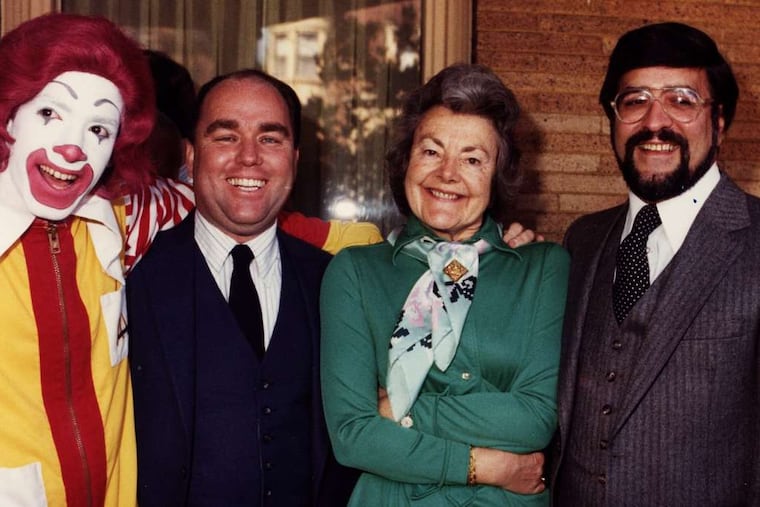
The first Ronald McDonald House, a space for care and comfort, was established in West Philadelphia
What started as a collaboration by Children's Hospital of Philadelphia, the Eagles, and McDonald's is now a network of 400 houses in 62 countries, including three in the Philadelphia region.
Watching parents struggle to pay for lodging and food as their children underwent treatment for cancer in the early 1970s broke the heart of Children’s Hospital of Philadelphia oncology director Audrey E. Evans.
Evans, a British pediatric oncologist, wanted to do something to make the families comfortable during this terrible time. When she found a four-story, seven-bedroom house in West Philadelphia, she envisioned a space where beleaguered parents could stay, eat, and rest during the tough days and tougher decisions ahead of them.
She just needed $34,000 to buy it.
In 1974, on the other side of town, at North Philadelphia’s St. Christopher’s Hospital, Eagles tight end and wide receiver Fred Hill’s 7-year-old daughter, Kim, was fighting — and beating — acute lymphatic leukemia.
Hill wanted to make a difference for families with sick children. With the help of the team’s then-general manager Jim Murray, he formed the fundraising nonprofit Eagles Fly for Leukemia. Together, Hill and Murray approached Kim’s doctor, Lawrence Naiman, who suggested Hill chat with Evans. She was in the midst of building CHOP’s state-of-the-art cancer facility and needed the money more than he did.
“The Eagles pledged a million to build the oncology ward,” said Ronald McDonald House CEO Susan Campbell. “That began Dr. Evans’ relationship with Fred Hill, Murray, and Eagles owner Leonard Tose.”
Evans didn’t stop there, said Campbell. “She told them, ‘I need to buy this house in West Philly. I need $34,000.′”
The Eagles and McDonald’s, the fast-food chain, were clients of the same Philadelphia-based firm Elkman Advertising. Tose devised a deal: He offered then-regional manager of McDonald’s, Ed Rensi, his top players, including Roman Gabriel and Bill Bergey, as spokesmen for the Shamrock Shake. His ask? Maybe McDonald’s would donate a portion of the proceeds to Evans’ house.
“Rensi said that he would give Evans all of the proceeds if she would call it the Ronald McDonald House,” Campbell said.
On Tuesday Oct. 15, 1974, Tose, Gabriel, Bergey, then chairman of McDonald’s Ray Kroc ( the same Ray Kroc for whom the area Salvation Army Kroc Centers are named for), and Mayor Frank Rizzo joined Evans at the ribbon cutting of the world’s first Ronald McDonald House, at 4032 Spruce St.
That ribbon cutting will be feted as a “firstival” from 11 a.m. to 1 p.m. Saturday at the Ronald McDonald House’s Chestnut Street location. Firstivals are weekly parties the Philadelphia Historic District is throwing each Saturday celebrating people, places, and things born in Philadelphia in honor of America’s 250th birthday.
There are more local connections: South Jersey builder John Canuso, whose daughter had leukemia, donated the elbow grease, furniture, appliances, and electrical wiring for the original Ronald McDonald house, helping it build its reputation as a sweet space for care and convalescence. By 1979, 5,000 people from 29 states and seven countries called Ronald McDonald House home during a difficult time.
In 1981, the new Ronald McDonald House opened its doors at a 32-room mansion at 3925 Chestnut St. The new spot — also renovated by Canuso — replaced the original Spruce Street location. It remains open today and features 19 bedrooms, a kitchen, living room, library, and laundry room.
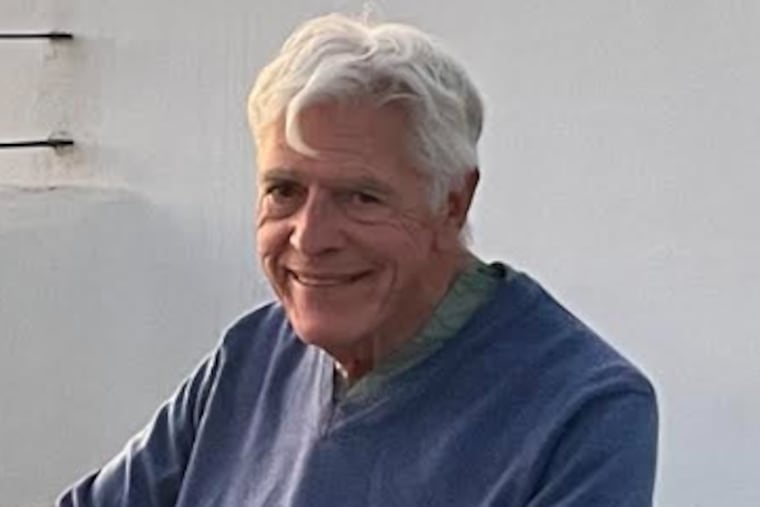
Kim Hill died when she was 44, in 2011. Radiation from her treatments for leukemia as a child caused brain tumors as an adult. Fred Hill is in his 80s and lives in California.
Evans died in 2024 in Philadelphia. She was 97.
Eagles Fly for Leukemia still raises money and has to date donated more than $12 million to pediatric cancer research, according to its website.
Today, there are about 400 Ronald McDonald Houses in 62 countries, including ones at 100 E. Erie Avenue in Juniata Park, in Camden, and in Wilmington. Families are given a room, three meals a day, and transportation to and from the hospital. The suggested rate is $25 a night, but no parent is turned away. All families with children facing life-threatening illnesses — and being treated at CHOP or neighboring hospitals − are welcome.
“The ultimate goal is that every child is healthy and that we wouldn’t need a Ronald McDonald House,” Campbell said. “But that isn’t the case. We are grateful that medical technology is advancing and that we’re able to support so many families on this journey.”
This week’s Firstival is Saturday, Sept. 26, from 11 a.m.-1 p.m., at the Ronald McDonald House at 3925 Chestnut St.
Each week, The Inquirer is highlighting a “first” from the Philadelphia Historic District’s 52 Weeks of Firsts. A “52 Weeks of Firsts” podcast, produced by All That’s Good Productions, drops every Tuesday.