Stephen Starr comes home
Two weeks before the scheduled opening night of Borromini, Stephen Starr returned from a trip to the South of France and drove straight to the restaurant, where he decided that virtually the entire pasta menu was wrong.
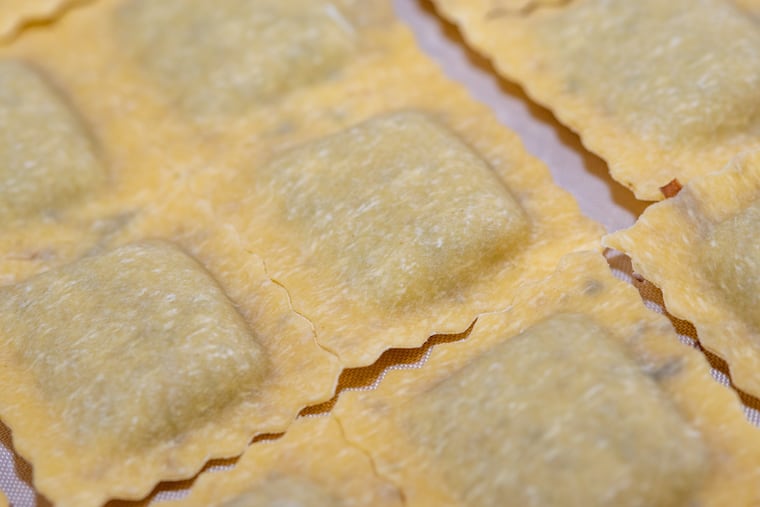
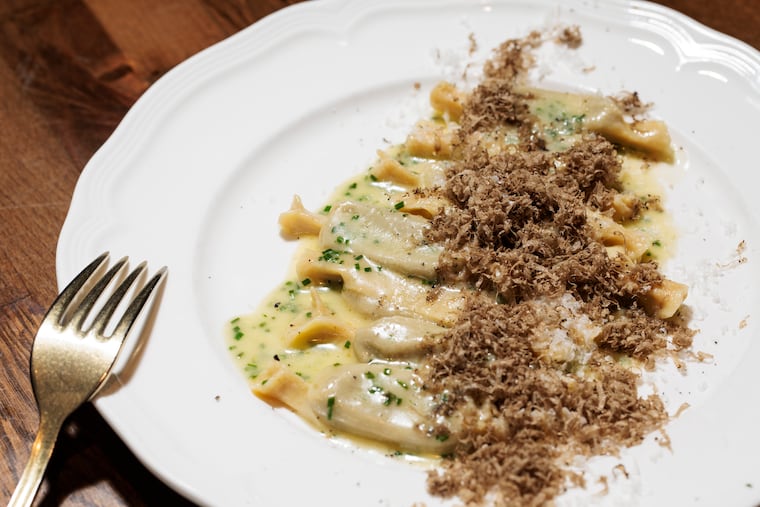
Over the course of the last year, Starr’s team of chefs had conducted at least 30 tastings of more than 250 dishes for the restaurateur. Pasta will be a focus at Borromini, with the 100-layer lasagna that chef Mark Ladner made famous at Del Posto — the Italian restaurant that earned an exceedingly rare four stars from the New York Times in 2010 — as its showstopping signature.
For five hours that evening, chefs made and remade dishes for Starr and two members of his inner circle. The lamb strozzapreti and pasta alla zozzona — a melange of carbonara, cacio e pepe, pasta alla gricia, and bucatini all’amatriciana — were knocked off the menu. New ideas, including lobster spaghetti and oxtail mafaldine, were on. What about mussels arrabbiata?
And the 100-layer lasagna was still not working, Starr said, even after 13 tries.
“When a dish is right, after all these years, I’ve developed a palate that’s pretty good,” Starr said. “That’s subjective, right? But pretty much, I think my palate represents the palate of most people.”
It is not unusual for restaurateurs to polish a project until the very last minute. But by any measure, the 18-month buildup to Borromini has been remarkable — even for Starr, an operator known for fanatical attention to detail, like sitting in every seat in his restaurants to ensure the lighting is just right from any angle.
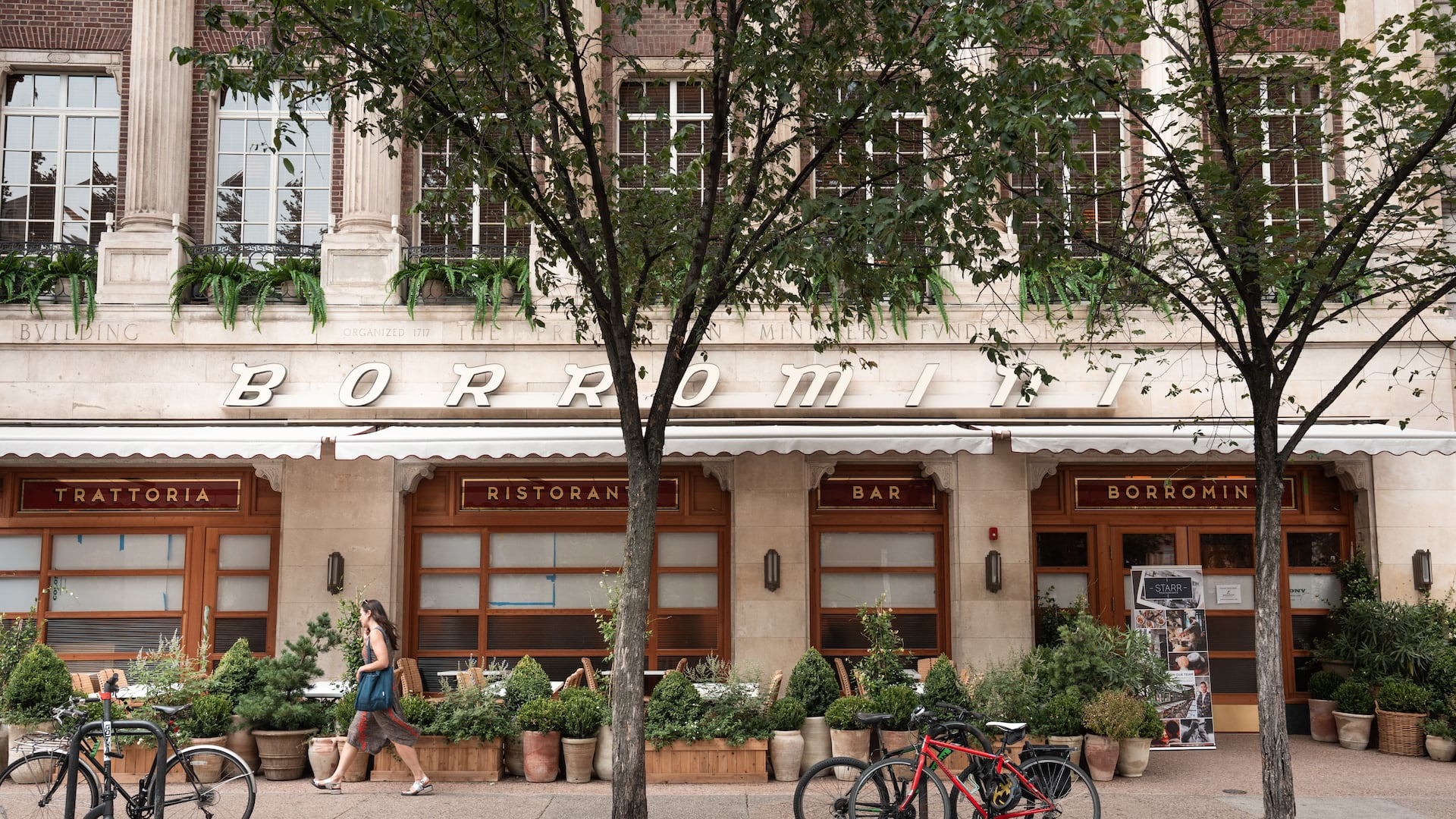
Borromini, whose debut is Aug. 25, is not just another opening for Starr and his restaurant group, which now operates 40 restaurants up and down the East Coast. A $20 million, 320-seat trattoria with a two-story, hand-painted fresco over a marble staircase, it is both the culmination of Starr’s three-plus decades of opening genre-defining restaurants and a homecoming as his most ambitious restaurant in Philadelphia since 2008, when the megahit brasserie Parc debuted on Rittenhouse Square.
It will be Starr’s 41st restaurant, a staggering number for a restaurateur, even one whose company counts more than 5,000 employees and generates $350 million of revenue a year. But he shows no signs of slowing down, with four additional restaurants planned in the next 18 months. To Starr, each new spot is another fail-safe. “On the most basic level,” he said, “I’m always afraid that whatever I open will eventually go out of business, so I want to have something else to fall back on.”
Starr first toured the shuttered Barnes & Noble in 2023 at the request of building owner Allan Domb, one of his investors and the landlord of his other restaurants on Rittenhouse Square (Parc, Barclay Prime, and a new restaurant planned for the former Devon Seafood Grill). Starr left convinced that there was something behind the century-old Alison Building’s red brick-and-limestone facade. “One of the key words is magic,” he said. “There’s no formula to know if a space is right. You walk in and just feel it.”
The space, spanning about 16,000 square feet over two floors, dictated an Italian restaurant that could be as popular as Parc. “I had to think about what could work in a space of that size, and I was limited in [concepts] that would be mass appeal,” Starr said. “And there’s no Italian, really, on Rittenhouse Square.”
The project, code-named Alison, was set later that year. Starr, who has long partnered with star chefs and boldface names — Masaharu Morimoto (Morimoto), Douglas Rodriguez (Alma de Cuba), Daniel Rose (Le Coucou), Peter Serpico (Serpico, Pod) — assembled a supergroup to contribute to it, among them Ladner; the LA chef and bread savant Nancy Silverton, with whom he runs Osteria Mozza in Washington, D.C.; and Keith McNally, the firebrand New York restaurateur whose bistro Pastis Starr has syndicated to multiple cities since the pair partnered to revive it in 2018.
It was McNally who suggested the name. The building reminded him of the work of Francesco Borromini, his favorite 17th-century Roman architect.
“At first, I didn’t like it,” said Starr, who typically chooses names after soliciting feedback. As he said the name over and over, he began hearing Queen’s “Bohemian Rhapsody” in his head, with “Oh, Borromini! Borromini!” replacing “Oh, mamma mia, mamma mia!” in the chorus. “Now I love it.”
» READ MORE: Photo gallery: The making of Borromini
Starr asked McNally — whose exquisitely detailed restaurants are the template for modern brasseries and bistros around the country, including Parc, which is modeled on the classic SoHo brasserie Balthazar — and Pastis designer Ian Paisley to collaborate with Stokes Architecture & Design, the Philadelphia firm whose Starr work includes the Dandelion, Frankford Hall, and Le Diplomate, to create the look and feel of the new restaurant. “I didn’t want the typical designer thing,” Starr said. “I wanted Keith’s perspective.”
By contrast, the food should be simple, Starr said. “We’re not trying to make things complicated with a lot of ingredients,” he said. “It’s the simplicity of Italian food that makes it great — and that makes it also very difficult to do.”
For all of Starr’s Philadelphia restaurants and concepts over the years, he has had only two that served Italian food in a town known for its love of Italian food: Angelina (2003 to 2005) and Il Pittore (2012 to 2016), both modestly financially successful. He could not explain why he’s avoided Italian restaurants for so long, especially because he makes no secret that he’d love to open a red-gravy joint someday on the order of Villa di Roma, which he describes as his favorite restaurant that he does not own.
There are many cooks in Starr’s kitchen, directed by Erik Battes, Starr’s executive vice president of food and beverage, who was previously the chef of Jean-Georges Vongerichten’s flagship. Creating Borromini’s menu were Ladner; executive chef Julian Alexander Baker, last at Starr’s Le Zoo in Miami after turns in Italy; Shane Solomon, corporate chef and former chef de cuisine at Angelina and Pizzeria Stella; and Allen Carringer, a veteran of Stella who is Borromini’s chef de cuisine.
Starr likened the menu-development process to the Brill Building, the 1960s rock-and-roll hit factory in New York where songwriters like Neil Sedaka, Gerry Goffin, Burt Bacharach, and Carole King got their starts. “You put them in the Brill Building, and one guy tries to write a better song than the other guy,” Starr said. “There’s this competition. Here, it’s ‘Oh, you know what? My bolognese is better.’ ‘Well, try my bolognese!’ Just like the record label gets the benefit of the competition, you get the best bolognese.” (The bolognese that will be on the Borromini menu is by chef Martell Fonville, who will be chef de cuisine at Starr’s reincarnation of Babbo, opening next year.)
It’s the simplicity of Italian food that makes it great — and that makes it also very difficult to do.”
A former concert promoter, Starr has long thought of himself as a record producer living hit to hit — and speaks constantly in music industry metaphors. He considers the design of Buddakan in New York, which opened in 2006, to be “my Sgt. Pepper. After I looked at it, I went, ‘How can I ever do anything more spectacular than this?’”
But, he said, “maybe Borromini is my White Album.”
For someone who creates such an assortment of over-the-top restaurants, Starr himself is a constant: perma-tanned, with close-cropped dark hair, black glasses, a sport jacket over a dark T-shirt, slacks, and sneakers. Despite being one of the most prominent restaurateurs in the country, he keeps a low profile, even declining to discuss his age.
The son of a television repairman from South Jersey, he has had a taste for theatrics since the 1970s, when he was a student at Gateway Regional High. An aspiring disc jockey at 15, he was hired and fired from two jobs at New Jersey radio stations. He also worked for several summers at a shop on the Atlantic City Boardwalk, selling schlock — jewelry, Hummels, stereos, what have you — on commission. “It was there that I learned to sell, and what I could sell best was myself,” he said.
Starr enrolled at Temple University to study film, and left so broke that a girlfriend dumped him after he asked her for a dollar to buy a tuna sandwich. “I was never going to put myself in this position again,” he said. “I tried a little bit harder.”
In the 1980s, with partners, he started opening clubs (Grandmom Minnie’s, Stars), signing rising New York comedians such as Jerry Seinfeld, Larry David, Richard Belzer, and an aspiring standup from Mount Airy and Abington named Bob Saget. Starr also owned the popular Ripley Music Hall, and booked Madonna into the Spectrum and George Michael (with Wham!) at Veterans Stadium. By 1990, Electric Factory Concerts, the local dominant concert promoter and a forebear of Live Nation, was trying to bigfoot him. He fought back in court, but in the end sold his company to the promoter.
That same year, out of showbiz, Starr opened the Bank, a nightclub in a former bank designed by Frank Furness at Sixth and Spring Garden Streets, and got his first taste of the restaurateur life. Shake, Burger & Roll, his 1950s-style burger shop in Ardmore, had amoeba-shaped mirrors, jukeboxes on every tabletop, and waitresses whose name tags all read “Blanche.” One of his few true clunkers, it closed after nine months.
Still committed to the business, an early 1990s trip to New York sold him on a nascent revival of Rat Pack cocktail culture. He leased the Continental Diner in Old City, replaced the Formica counter with a concrete bar and positioned light fixtures resembling giant cocktail olives with toothpicks over the booths. In September 1995, he launched it as the Continental, working the bar himself on Sundays. Crab pad Thai, beer-battered shrimp and calamari, and shrimp scampi were on the “global tapas” menu, alongside a slate of cosmos and martinis. The Dean Martini was served in an oversize martini glass with a Lucky Strike cigarette and a book of matches, and a server sprayed vermouth from an atomizer over the drink, all for $7. (The Continental closed during the pandemic but spawned a location at 18th and Chestnut Streets, as well as other branches nationally.)
It was the next restaurant that made Stephen Starr, well, Stephen Starr. In 1998, he took over a post office to open Buddakan, a pan-Asian restaurant with a 7-foot-tall Buddha statue atop a 4-foot pedestal underneath a soaring ceiling, an 18-foot light-up communal table, a waterfall, and a menu of then-edgy dishes such as edamame ravioli and crying chocolate dessert.
The idea of dinner-as-theater did not exist in Philadelphia before Starr. He roared into the millennium with a quick succession of high-concept showpieces, such as the sci-fi space shtick of Pod, the still-striking Morimoto with its pioneering sculptural lighting scheme, a dramatic interpretation of old Cuba for chef Rodriguez at Alma de Cuba, the wall of (real) candles at the Moor-is-more Moroccan fantasy Tangerine, and the retro, shag-carpeted comfort-food den of Jones.
Starr has also shaped the restaurant scene in Philadelphia through the talent he has nurtured and seeded throughout the industry. Michael Schulson, opening chef at Buddakan in New York, and Jose Garces, Rodriguez’s chef de cuisine at Alma de Cuba, created empires of their own. Major restaurant groups such as Defined Hospitality (Kalaya, Beddia, etc.) count Starr alumni among their ranks. Cantina La Martinez chef-owner Dionicio Jimenez (El Rey) and Amá chef-owner Frankie Ramirez (LMNO) each ran kitchens for Starr, while Carlos Aparicio (El Chingón) led the bread program at Parc. And that’s just a partial list.
By 2006, Starr was too big for this town. He opened Continental and Buddakan in Atlantic City — since closed — and headed to New York, where he struck deals at Chelsea Market for the instant hits Morimoto (closed in 2020) and Buddakan. It was the beginning of an expansion that would take him to Washington, Miami, West Palm Beach, and Nashville, rendering Philly just one node in a greater empire, a fact that has not gone unnoticed in his hometown. In 2018, Inquirer critic Craig LaBan flatly declared, “It’s been too many years since Starr opened any local projects of major importance.”
If there is a consistent critique of Starr’s restaurants, it’s clear that with few exceptions (“my whole company loves Parc”), they eventually lose his laser-like focus — El Vez, Barclay Prime, Buddakan, and Frankford Hall have all been subject to downgrades over the years by LaBan. (Barclay Prime has seemingly recovered.) LaBan went so far as to say, when reevaluating a number of them, “Starr’s current impact as a cultural tastemaker? Lately, not so much.”
It’s a fault that Starr readily admits to. “After that project is complete, I lose interest,” he said. “The excitement is the conception of them, the design, the work around them.”
In 2017, after a quarter-century of opening restaurants, Starr finally achieved an accolade he had long sought: the James Beard Award for Outstanding Restaurateur, which he won on his 10th nomination. At the same ceremony, Le Coucou, the French destination he opened with Rose, his first true critical smash in New York, won for best new restaurant.
Starr’s ascendence from hit restaurateur to critically vindicated impresario presented new opportunities with vaunted chefs and elite restaurateurs. He could be a new kind of mega-producer. “I look at this the way record labels operate,” Starr said, settling into the sofa in his office one day earlier this summer. “You have a big label, and you have these little boutique labels — still under one parent company, but I can’t come up with every idea. I can’t come up with every dish. Some of these artists like Nancy Silverton and the different chefs that are coming to us want to be a part of our label. They want autonomy to an extent, but they want to be part of our label.”
As if on cue, Starr’s cell phone rang. It was a partner in Dishoom, the acclaimed Indian fine-dining chain in London that visited Pastis New York City last summer for a popular two-week pop-up breakfast series.
Might he and Dishoom be considering something more formal?
Starr smiled and changed the subject.
For all his far-flung aspirations, Starr maintains his headquarters in Philadelphia, where his office is above the now-shuttered Continental in Old City. Besides Domb, all his partners are Philadelphia-based, including Aramark, which in 2021 announced that it had acquired a minority stake in the company.
And most of his empire remains a train ride away. “I sat with former President Biden and his wife in Washington at Osteria Mozza, and he was talking about the restaurant business,” Starr said.
“I said, ‘Let me tell you something, Mr. President. My business is more stressful than being president of the United States.’ He started to laugh and asked, ‘What do you mean?’ I said, ‘You have guys from West Point, MIT, and Harvard, all these experts, doing stuff for you. I got like three people, and the stress level is equal. Half of the stress that a president has, you don’t even know about. They don’t tell you. I know every single customer that’s complaining. I know every leak and pipe-burst that happens.’
“Of course, I was being facetious, but in some ways I think I wasn’t.”
After Borromini’s first city permit was filed in November 2023, design work began. In broad strokes, the idea was to create a restaurant — not necessarily grand — that feels like it has been there for years.
As a centerpiece, Philadelphia artist Zack Bird was hired to paint a scene inspired by Pompeii; its aged look suggests that the restaurant construction had exposed it after being hidden for a millennium. McNally also ordered six custom chandeliers with flower-shaped lights from the craftsman who had made similar fixtures for Ralph Lauren’s house.
The details throughout the space are just as lavish: Teams of artists hand-painted the tin ceilings to suggest the look of 50 years of cigarette smoke, distressed every piece of millwork on both floors, and antiqued every mirror. Each tile on the vaulted plaster ceilings is hand cut. Downstairs, the flooring is Italian marble and the bar is copper; upstairs, it’s knotty pine for the floor and Carrara on the bar top. Liquor and wine bottles line glass shelves not only at the bar but throughout the dining rooms.
The various pieces of Borromini’s interior went through Sarah Starr, 34, Starr’s oldest daughter and the company’s director of development and procurement, who served as liaison among the designers, architects, and contractors. She said her job was “getting pen and paper to reality. It’s ever-changing and chaotic, but also the people are so hard-working and passionate about what we’re doing.” When McNally found a wooden bench salvaged from an old bowling alley that he thought would make for ideal banquettes in the cafe section near the first-floor bar, she bought it and sent it to a fabricator to replicate it.
Starr went to similar lengths to source the food. He, Battes, chief operating officer Josh Levine, and Starr’s executive personal assistant, Mary Hulett, flew to Rome in March 2024 for a four-day dining excursion. On the last night, they sat down at Osteria Iotto — eight cozy tables, tucked off a side street in a village 45 minutes outside of Rome.
Bite after bite was incredible: There was fritto misto — lightly battered deep-fried vegetables — served on fried spaghetti. There was spaghetti con la colatura di alici, in an umami-packed fish sauce. And there was lasagnetta with artichokes and mushrooms. Chef Marco Pasquali’s cuisine, they felt, must be transported to the United States to inform Borromini’s menu.
Starr paid the chef to shut down his restaurant for a week and flew him and his son Lorenzo to New York. In crisp black uniforms, they worked in the kitchen of the Clocktower, a Starr restaurant, sharing recipes and techniques with a team of Starr’s chefs.
Marco cooked, Lorenzo translated, and plates and forks clattered as Starr, Battes, Levine, Ladner, and Hulett tasted. The deep-fried spaghetti could be a premeal snack, the earthy lamb strozzapreti might make for a pasta course. Marco sent out cacio e pepe — not terribly novel, but he’s from Rome, after all, and Starr wanted to see how Marco’s compared to his own chefs’ versions.
Borromini’s desserts, at least, are coming from a place a little closer to home: Dominique Piscitelli, a pastry consultant from 12th and Mifflin, was pulled in to create them. Piscitelli, who worked for Marc Vetri, is “a legit Italian from South Philly who lives and breathes Italian pastry,” Battes said. “Within five seconds of meeting her, I knew she was destined to help us.” Piscitelli’s cannoli, chocolate olive oil cake, and assembled-to-order tiramisu are among her contributions.
Silverton’s famed focaccia di recco, a crackerlike flatbread whose layers are filled with creamy cheese, which Starr first tried about a dozen years ago at her LA restaurant Chi Spacca, will also be on the menu. “His love affair with that one dish cost him how many millions of dollars that he put into [Mozza] just so he could get the recipe for that focaccia,” Silverton told The Inquirer, laughing.
Before Borromini’s kitchen — which will be staffed with nine chefs and 91 hourly workers — was completed in late June, Starr held tastings with trusted voices wherever one could be secured for a few hours: El Vez in New York before lunch service, or Barclay Prime before dinner. They’d sit at a table — a can of Diet Coke for Starr, Pellegrino for everyone else. As they sampled, Battes’ assistant, Maya Leveen, logged each ingredient and method.
There were, for a time, 28 pastas on the list. It was whittled to 15, with the idea that the menu can accommodate 10 to 12. Starr said that although he seeks consensus, “in the end, when I’m certain it has to be that way, I decide. There’s no more discussion, and the democracy is over. I appear to be insecure about my decisions because I’m always questioning myself, but once it’s done, it’s done.”
Last month, as tastings were set to wind down, Starr spotted a zucchini pasta called spaghetti alla nerano on a Stanley Tucci TV special and asked his chefs to make one. He wanted more options, so he summoned one of his corporate chefs — Laurent Gras, whose background includes Alain Ducasse and Guy Savoy and whose Chicago restaurant L20 was awarded three Michelin stars — to take the Acela from New York one afternoon to try his hand at it. It’s anyone’s guess if it will make the menu.
Starr’s own kitchen skills are limited to making soup or grilling a steak, but he has a powerful sense memory that rivals any chef’s or critic’s. Sixteen years ago, during dinner at Del Posto, Starr sampled Ladner’s 100-layer lasagna, a decadent feat of engineering that requires long wooden spears to cinch together layers of pasta, bechamel, tomato sauce, and cheese. When Starr tapped Ladner to help develop the menu at Borromini, recreating the original was high on his priority list.
When a dish is right, after all these years, I’ve developed a palate that’s pretty good. That’s subjective, right? But pretty much, I think my palate represents the palate of most people.”
For months, tasting after tasting, Starr insisted that the lasagna he was being served wasn’t the one he had eaten all those years ago.
Baker, the executive chef, broke down every element — concentrating the tomato sauce, increasing the roux, removing egg and milk from the bechamel (or besciamella, as they call it in Italian), altering the construction. Eventually, Ladner realized that Starr was correct. The lasagna was different. “I’ve done many iterations of it, probably 20 different ones,” Ladner said.
And yet: After approving the “new” lasagna on Aug. 15, Starr had some doubts. He said he was searching for something deeper and more visceral in the dish. The next day, he asked Baker to reopen development on it. Two days later, after a side-by-side comparison of two versions, Starr approved the lasagna — Battes hopes.
The “final” menu? Who knows. Over a five-day stretch in the last week, it was changing three times a day, Battes said. “In many ways, a restaurant is never done,” he conceded.
At this point in his career, Starr said, it’s no longer simply about making money. Randi Sirkin, the executive in charge of creative services and a 25-year Starr veteran, said that Starr is “just creating his legacy and in this recent phase, he’s finally gotten to do the things that really inspire him. Did I ever think we’d partner with Louis Vuitton [in New York City] or Nancy Silverton? Now he’s just saying, ‘Let’s have fun.’”
Early next year, he will reopen the landmark Babbo and the smaller Lupa in New York, which he bought from Joe Bastianich, who founded them with Mario Batali. Ladner, who went from opening Lupa to Del Posto, will become Babbo’s executive chef.
Starr claimed he was getting tired of the big productions. “I would love to do smaller things or even some fast casual, maybe Jackass Burrito as this freestanding, 1,200-square-foot place on college campuses,” he said. “I’d like to do an El Vez but as a competition to Taco Bell in a suburban setting with our design elements. I’d rather do something that’s a little cheaper to do with less stress but great potential.”
In the next breath, he rattled off more ideas for Italian food. “If Borromini does well, I definitely want to do one in Miami, and possibly New York,” he said.
OK, maybe he isn’t so tired of doing splashy productions.
“There’s that mentality that you’re never sure you’re going to last. More arrogantly, I keep opening restaurants because I can. But as I analyze myself, that is the least possible reason I do it. I’m perpetually bored and I have ADD,” Starr said. “There’s a sadness that comes upon me, and I need another fix. It’s like a drug. I need more. In order to get high, I need another restaurant.”