Lemon turmeric gummies for nausea: How CHOP and Drexel researchers taught caregivers to cook for kids with cancer
Families caring for children with cancer participated in group cooking sessions led by medical chefs and nutritionists in a CHOP and Drexel pilot study.

Zaiya Mariano’s taste in food changed after her leukemia diagnosis at age 2.
Once an adventurous eater, the toddler began craving cheeseburgers and plain pasta. Other times, nausea from treatment stole her appetite.
Wanting to support her daughter beyond medication, Deborah Mariano enrolled her family in an early-stage nutrition study created by researchers at Children’s Hospital of Philadelphia and Drexel University.
The so-called “Caregiver’s Kitchen” taught participants recipes and nutritional guidance to support growth and leukemia symptom management in children with cancer. The remote program included group cooking sessions led by doctors and nutritionists, along with individual coaching over eight weeks.
“There’s a lot of toxicities associated with our treatments and with cancer itself,” said Tracey Jubelirer, a CHOP pediatric oncologist who co-led the study. “How can we provide a more whole-person, holistic approach to cancer care?”
The results, published in August in the academic journal Integrative Cancer Therapies, suggest the program could be a practical approach to providing culinary guidance and coaching to families of children with cancer. Given the pilot initially involved only 10 families, the team will need to conduct a larger trial to assess its efficacy.
Mariano found the study useful in helping her daughter maintain adequate nutrition during her yearslong treatment regimen. Even now that Zaiya, age 6, is cancer-free, Mariano continues using many of the tips and recipes she learned.
“It eliminated a lot of the preparation or decision fatigue,” she said.
The Caregiver’s Kitchen model
Drexel researcher Brandy-Joe Milliron studies an often-overlooked challenge: Why is it hard for cancer patients to maintain a healthy diet?
Side effects from treatment, including nausea, vomiting, mouth sores, constipation, and diarrhea, are often cited reasons.
Many patients also view diet as “their last opportunity [to control] something that’s so out of their control,” she said, creating a cycle of stress over mealtime decisions.
She connected with Jubelirer, who researches holistic approaches to cancer care, through their shared work in the “food-as-medicine” field.
In recent years, more hospital programming, nonprofit efforts, and policy initiatives are emphasizing the role of food in preventing and managing disease. The interest brought diverse business owners, researchers, and policymakers together to launch the Philadelphia Food as Medicine Coalition late last month, with the goal of organizing such efforts locally.
» READ MORE: Philadelphia Food as Medicine Coalition wants to improve health through nutrition
To better understand the needs of pediatric cancer patients, Milliron and Jubelirer teamed up to lead a study educating caregivers through culinary medicine workshops led by a medical chef educator. Held every other week on Microsoft Teams, the sessions discussed concerns including malnutrition, nausea, gastrointestinal health, and appetite.
Children with cancer frequently lose weight due to the disease and its treatments. Finding foods that are both calorie-dense and nutrient-rich can help meet children’s nutritional needs.
“We forget that kids going through cancer therapy are still growing and developing,” Jubelirer said.
The session on managing nausea through food featured a popular recipe for lemon turmeric gummies.
It also showed families how to cook with reduced food odors and incorporate ginger as a natural antinausea ingredient.
Other recipes aimed to ease constipation and gastrointestinal discomfort, featuring high-fiber ingredients like prunes and hydrating options such as popsicles and fruit-infused water.
A workshop for poor appetite showed how to add healthy fats like avocado to mac and cheese, and incorporate nut butter and high-fat dairy sources.
“How can we, in a palatable way, add hidden calories?” Milliron said.
Adding crunchy textures can make eating more engaging for children. The workshops also showed how familiar snacks, such as ramen and Bagel Bites, could be deconstructed and recreated into healthier versions.
A family’s experience
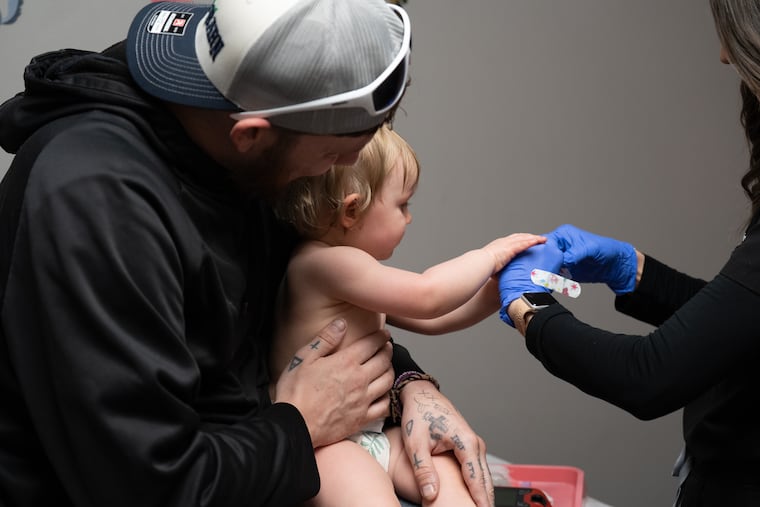
When Zaiya was diagnosed with leukemia in 2023, she underwent a flurry of medical appointments and treatments.
She received blood draws, spinal taps, a port to deliver treatments, chemotherapy, and short courses of steroids in between.
“They’re so little, and there are so many medications that they’re already on,” said Mariano, who lived in Phoenixville during the study but recently moved to South Brunswick, N.J.
During Zaiya’s second year of treatment, Mariano was invited to participate in the study.
She embraced the opportunity to help her daughter without more medications. Even before cancer, her daughter was on the skinnier side, she noted.
Mariano was struggling to plan appropriate meals, feeling decision paralysis as she was already busy “making critical decisions” regarding Zaiya’s life.
“We eat every day, but the information that we have on how we should actually eat is very limited,” she said.
At the end of cooking sessions, the families would all try the food and “get a verdict right then and there,” from the kids, Mariano said.
Some recipes were a solid no, she recalled, while others were widely loved. Zaiya enjoyed a lemon recipe for nausea, but didn’t like a turmeric milk one.
Beyond the recipes, Mariano most valued learning about foods and ingredients she could incorporate into her daughter’s diet. She learned how to hide vegetables in sauce and increase caloric intake using nutritional yeast.
“Even though I may not make the exact recipe that they did, I will incorporate the ingredients that they taught us about,” she said.
Jubelirer said the pilot study for research was limited. No such program is currently being widely offered.
The research team hopes to launch next year a randomized controlled trial, the gold standard method for testing a cause-and-effect relationship. It will be four weeks longer than the two-month pilot, and incorporate new content on weight management and batch cooking.
Sessions will be asynchronous and module-based to make it more scalable to a larger group.
“One day, we hope this is part of standard of care in a program at CHOP and other places,” Jubelirer said.