A deaf woman was crowned Miss America for the first time on this week in Philly history
For the first time in the history of the Miss America pageant, which dates back to 1921 at the Jersey Shore, a deaf woman would wear the coveted rhinestone tiara in Atlantic City.
As Heather Whitestone’s dream veered toward reality, her hearing aid wasn’t working and she had lost sight of Regis Philbin’s lips.
The 21-year-old Miss Alabama couldn’t hear the talk show host, or read his lips, when he announced the winner of the Miss America pageant on Sept. 17, 1994.
Rebecca Blouin — Miss Mississippi — turned to her fellow Southerner and shared the news, which broke a barrier at what many consider the United States’ most-celebrated beauty contest.
For the first time in the event’s history, which dates back to 1921 at the Jersey Shore, a deaf woman would wear Atlantic City’s most prestigious award: a rhinestone tiara.
Unheard of
Whitestone was not born deaf.
At 18 months old, she contracted a serious bacterial infection that damaged the nerves in her ears and led to a total loss of hearing.
Years of therapy taught her how to speak, and she utilized hearing aids, but Whitestone navigated her way through life primarily by reading lips.
In media interviews during the pageant, she didn’t use an interpreter.
“It’s a physical challenge, not a handicap,” she told The Inquirer in an interview prior to her win. “I really believe the most handicapped people are those who have a bad attitude.”
Feeling the love
Leading up to the main event, attendees showered the Birmingham, Ala., woman with standing ovations as she made it through the pageant’s three nights of preliminary competition.
That affection carried over into the finals, when the ballet dancer dazzled judges Philbin and Kathie Lee Gifford with her talent and chutzpah.
As Christian singer Sandy Patti performed the song “Via Dolorosa,” Whitestone glided along on her tippy toes — counting beats in her head to help keep pace.
“She is an extraordinary human being,” Gifford told The Inquirer.
Crowning achievement
Whitestone was not the first deaf contestant, but she remains the only deaf woman to have won.
A reporter would later ask Whitestone about the potential challenges she faced fulfilling such a public-facing role.
“I think I’m doing just fine,” she said with a wry smile. “I mean, look at us now.”
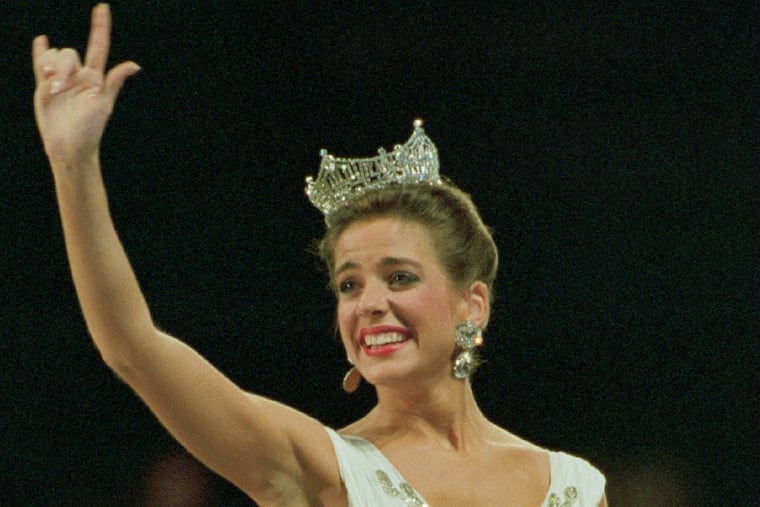
When Whitestone, as the newly crowned Miss America for the forthcoming 1995, took her victory walk down the runway, she raised her hand to the thousands in Convention Hall, signing “I love you.”
Whitestone couldn’t hear their response — the hearing aid in her left ear was overwhelmed by the thunderous ovation and transmitted only static — but she didn’t need to.
She could read the smiles on their lips.