He spent years searching Kensington for his niece. She is now identified as one of Raymond Horsch’s possible victims.
Lelia Mae Wright's uncle tried for years to get her off the streets of Kensington and took her to rehab. He recently learned that she wound up in Horsch's Olney home.

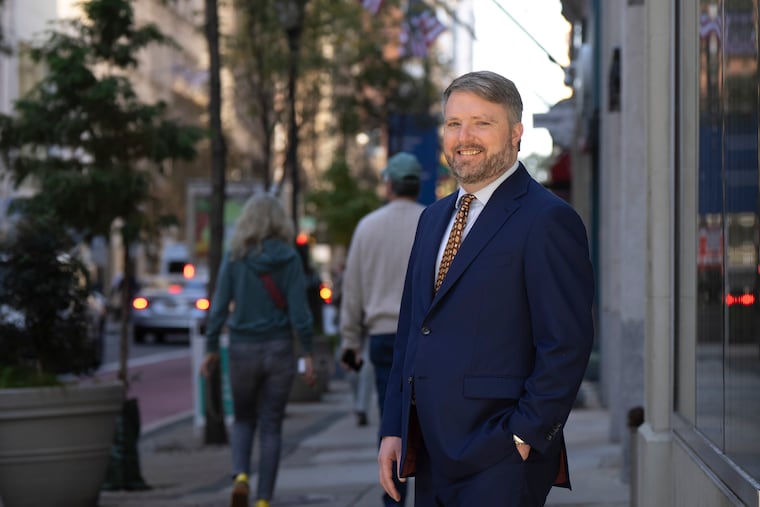
At sundown, Paul Wright would drive up and down Kensington Avenue in his Ford Explorer between the Erie-Torresdale and York-Dauphin stations, looking for his niece. He checked her into at least four drug rehabs in Camden, Trenton, and Philadelphia, but she would always run.
He had not seen her in years, and hoped she had finally found sobriety and moved away.
She hadn’t.
Police now believe his niece, Lelia Mae Wright, is one of at least seven women who may have been killed inside the home of deceased pornographer Raymond “R.C.” Horsch, her uncle recently learned.
“I have some closure,” he said, his voice shaking. “But now I need answers so I can kind of try to figure out what led up to this.”
During a September news conference, police explained that a trove of video and photographic evidence recovered from searches of Horsch’s Olney residence pointed to the possibility that at least five of the seven women were dead.
One victim, who had not previously been named at the request of a relative, was a 25-year-old woman who appeared unconscious and with visible injuries in some recovered photos.
Paul Wright said two family members have told him that investigators were referring to his niece, and a police source confirmed to The Inquirer that the woman was Lelia Wright, whose first name was pronounced Leah.
Wright said he spoke with a detective who declined to provide exact details on the circumstances of her death because he is not considered next of kin.
“Short of not telling me, he told me it was her and she was gone,” said Wright, 49, a construction foreman and father of four.
Wright said relatives told him that police were able to identify her from tattoos on her neck, chest, and back.
“I can’t lay her to rest, I can’t get her cremated and put her with her dad or her grandmom,” he said. “I can’t do anything for her because, as far as I know, she was dissolved in liquids or buried somewhere.”
A chance car stop on June 19 led to the arrest of Horsch’s son, Eugene, after police discovered guns, drugs, and a fake ID made out in the name of another missing woman, Blair Tonzelli. Eugene Horsch is in prison on federal charges, but has not been accused of violent crimes involving the deaths or disappearances of the women. Raymond Horsch died last year.
The discovery of Tonzelli’s ID prompted a sprawling investigation into the Chew Avenue home. For months, crews have excavated pipes, sewer lines, and sections of the front and back yards. Inside, they have torn up floors and taken down walls in search of forensic evidence.
Police have uncovered numerous videos and photos from Horsch’s home they have said seem to show real violence and actual killings.
While the absence of physical remains presents a hurdle, a physical body is not required to declare or prosecute a homicide.
“Usually when we have a homicide investigation, we have a body, we have body parts,” Police Inspector Raymond Evers said at an August news conference.
“This time we do not.”
A hard life
Life had never been easy for Lelia, Wright said.
Her biological mother, who could not be reached for comment, took her and four siblings to Virginia from Philadelphia when Lelia was little. Relatives intervened after it became clear the woman was unable to care for the children, and Lelia’s grandmother — Paul Wright’s mother — was granted custody, he said.
Since the age of 5, Lelia had been raised in Philadelphia by her grandmother, Julia Wright, her dad, Thomas Wayne Wright, who died in 2019, and his longtime partner, the mother of five more children.
Paul Wright pitched in, too, and for a long time, Julia Wright, Thomas Wright, and Paul Wright lived in three rowhouses on the same block on East Arizona Street near Coral in Kensington.
Lelia dropped out of school and started using drugs as a teenager, Wright said. Her grandmother, whom Wright described as a “no-nonsense mama bear,” put bells on the bedroom doors of Lelia and her two sisters to alert her when they snuck out.
“I can’t tell you how many times my mom would call me and tell me that Lelia ran off, to go find her, and I would go find her and bring her back home,” he said.
When her grandmother died in 2011, at age 71, a devastated Lelia turned to drugs to ease the loss.
“That was probably the catalyst that finally put her out there,” Wright said. “That was the thing that just drove her away.”
Court records show that she was arrested in Philadelphia and Montgomery County at least 11 times between 2012 and 2016 for minor offenses, principally drug possession or sex work. She was repeatedly described as homeless in arrest records, sometimes listing the offices of social service provider Prevention Point as her home address.
Nearly all of Wright’s Philadelphia arrests occurred between the 2800 and 3500 blocks of Kensington Avenue, placing her right in the area where Raymond Horsch picked up drug-addicted women to pay for sex or pornographic work.
Wright said the last time he saw Lelia, she was on Kensington Avenue near M Street, talking to an older man in a dark minivan.
“C’mon, let’s go, Lelia,” Wright called out to her. “We’re going to rehab.”
Lelia took off.
The man in the minivan stepped out, and Wright said he smashed the back driver’s side window with his fist, shattering the glass. The man walked to the back of his car to get something, and Wright said he punched him in the head.
He doesn’t remember the date. He doesn’t know if this man was Horsch.
“What if that old guy was him?” Wright asked. “What if that last time I saw her was the last time he was out looking for girls? These are all things that are going to be pinging around in my head now for the rest of my life.”
Lelia’s contact with the court system abruptly ended in December 2016. She was not formally reported missing at the time of her disappearance.
Over the years, Wright called the morgue, police, prisons, and hospitals multiple times.
“No one ever had any unclaimed bodies or anyone with that name,” Wright said. “So there was always still a hope that she was out there. There was always the hope that she might have gone somewhere and got clean.”
He never had her cell number. He assumed she used burner phones, and she had no presence on social media.
“Now I feel like I failed,” Wright said.
With no human remains yet found, Wright said, he will never have the real closure he seeks. He still thinks about the last night he saw her. What if he had been able to stop her from running?
“I went after her,” he said. “She got away from me, and that was the last time I ever saw her.”
He is convinced that there is more to the story.
“We can’t do anything to him [Horsch] because he’s dead, but there’s no way this could just be him,” Wright said. “Who helped him? How many other victims are there?”

The Inquirer’s journalism is supported, in part, by the Lenfest Institute for Journalism and readers like you. News and editorial content are created independently of The Inquirer’s donors. Gifts to support The Inquirer’s high-impact journalism can be made at inquirer.com/donate. A list of Lenfest Institute donors can be found at lenfestinstitute.org/supporters.