Make your own poke bowl
For something so cool, poke is really hot. The combination of chopped raw fish, rice, and vegetables - pronounced POH-keh - started in Hawaii, where you can pick it up like fast food. Now, poke is spreading across the country to restaurant appetizer menus and dedicated poke bars.
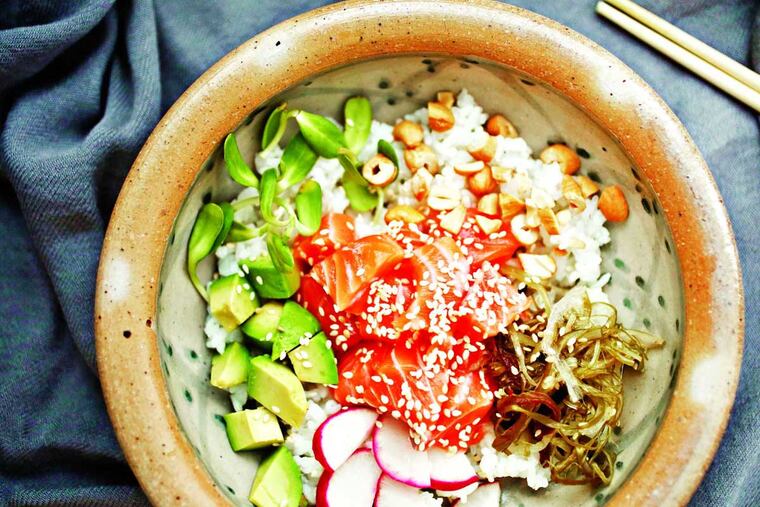
For something so cool, poke is really hot.
The combination of chopped raw fish, rice, and vegetables - pronounced POH-keh - started in Hawaii, where you can pick it up like fast food. Now, poke is spreading across the country to restaurant appetizer menus and dedicated poke bars.
It's even better to make poke bowls at home. Get the right ingredients, do a little chopping, and you have a simple, satisfying meal. You can even throw a poke party and let guests fill their bowls with the base, fish, toppings, and sauce they prefer.
Fish is a crucial part of a poke bowl. Tuna is traditional in Hawaii, but you can use other kinds of firm, thick fish. Thin, flaky fish, such as flounder, will not hold together in cubes as well. Cooked shrimp or crawfish also are good. Some poke bars offer cooked chicken or tofu for those who don't like fish. The Food Network's Aarti Sequeira has used roasted beet cubes to make vegetarian poke.
No matter the fish, it's important that it's absolutely fresh, as with sushi, because you're using it raw. Remember that the term "sushi-grade" is not regulated, so it could mean anything. Use your eyes and nose. Ask where the fish came from and when it arrived at the store. Fresh fish shouldn't smell "fishy," but should have a clean, oceanic scent. Avoid fish that appears slimy or has a sheen that may indicate age or the use of preservatives.
Be sure cutting surfaces and utensils are clean. Use a different cutting board and knife for vegetables to avoid cross-contamination from raw fish.
The key to poke is cutting the fish into small bite-size cubes, about 1 inch. Everything about poke should be easy to eat with chopsticks or a fork.
Because you'll be combining it with other ingredients, 1 pound of fish should be plenty for a main dish for one person. Half a pound would do for an appetizer or as part of a meal.
Next, the question is: to marinate or not. Marinating the fish overnight in the refrigerator in a combination of soy sauce and sesame oil is traditional. However, marinating gives the fish a chewy texture. If you prefer a more sushilike experience, don't marinate.
Typically, cooked and cooled sushi rice is the base for the fish and toppings. Other kinds of rice or even shredded greens also are options.
Customize your poke bowl with a selection of toppings. Fresh ingredients and flavors usually work best. But whatever you use, cut it into small pieces, similar in size to the fish. The amount of toppings is up to you, but try not to overwhelm the fish, which is the star.
Assemble your bowl
1. Select one base.
2. Pick a fish and arrange it on top of the base.
3. Add toppings - as many as you want.
4. If you didn't marinate the fish, sprinkle on a sauce or two. If you marinated it, you probably won't need more sauce.
Poke ingredients
Base. Cooked rice (sushi or brown), vegetable noodles, or shredded salad greens.
Fish. Raw options: tuna, yellowtail, sea bass, monkfish, salmon, grouper. Cooked options: shrimp, crawfish.
Toppings. (Use as many as you like.) Shredded nori, seaweed salad, shredded daikon radish, or other radishes; microgreens, chopped avocado, toasted sesame seeds, chopped cashews, black sesame seeds, minced garlic, cooked, shelled edamame; chopped scallions; chopped jalapeño, diced cucumbers.
Sauce. Ponzu, sesame oil, lime juice, flavored oils such as chili or ginger, soy sauce, sriracha or chipotle mayonnaise, hot sauce.