PHL ranked last among peer airports for the sixth straight year in a JD Power customer survey
The airport’s aging infrastructure is holding it back.
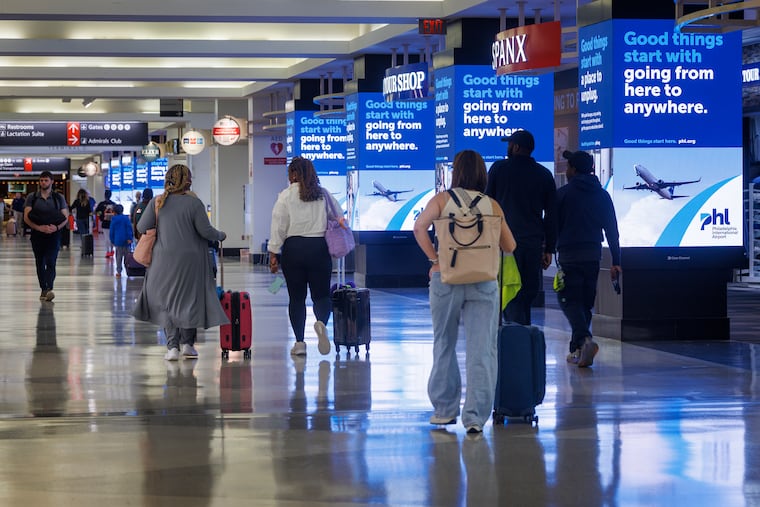
Philadelphia International Airport has once again landed at the bottom of JD Power’s traveler satisfaction survey among similarly sized airports — for a sixth year in a row.
The biggest thing holding PHL back continues to be its aging building.
“They’re in dire need of new terminal facilities,” said Michael Taylor of JD Power, later adding, “The building needs to be renovated or replaced.”
“When you run out of space, that’s a very limiting factor,” Taylor said. “There isn’t much you need to do other than get more space.”
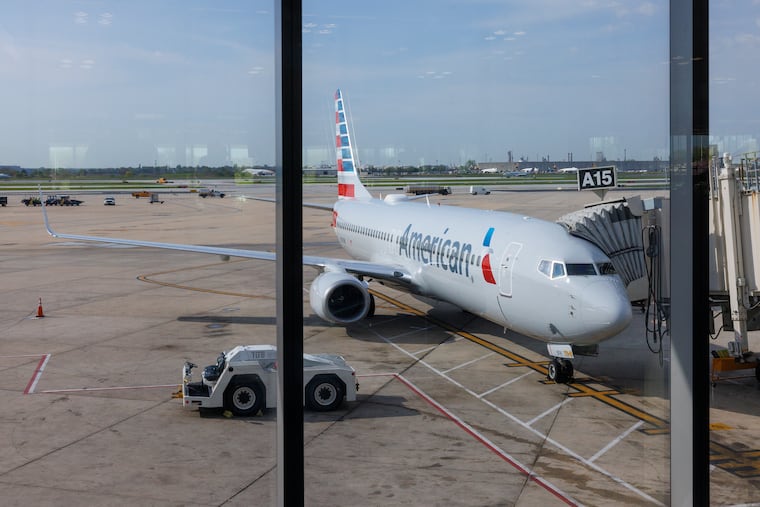
Last year, some 30.1 million passengers traveled through PHL — nearly 70% of them with American Airlines. While its ranking remained poor, its score on the JD Power survey improved by 26 points, to 596 out of 1,000.
JD Power surveyed 24,710 U.S. and Canadian travelers between July 2025 and July 2026. The survey asked about seven areas:
ease of travel through airport
level of trust with airport
terminal facilities
airport staff
departure/to airport experience
food, beverage, and retail
arrival/from airport experience
PHL competes among the large airport category, which includes airports that see between 10 million and 32.9 million passengers annually. America’s busiest airports, including LaGuardia Airport and Boston Logan International Airport, are in the next larger category, with at least 33 million passengers per year.
The top-ranked large airport was Tampa International Airport, with 715 points. Portland International Airport came in second, and Dallas Love Field came in third.
On Tuesday, ahead of the release of the JD Power survey, Mayor Cherelle L. Parker and PHL interim CEO Tracy Borda welcomed hundreds of attendees at the Convention Center in Philadelphia for an aviation industry conference and spoke to the media about PHL’s recent improvements.
“We know that there is more work to do at PHL,” said Parker, adding that an investment of nearly $2 billion in modernization is underway.
In a news release Tuesday, the airport acknowledged the expected JD Power report, adding that “JD Power has previously reported that passenger satisfaction rises when airports complete renovations and create a stronger sense of place.”
“PHL is in the midst of that work, not at the end of it, and the airport recognizes that construction itself can affect a traveler’s experience,” Borda said in the news release. “Each completed project, however, moves PHL closer to a more seamless journey and gives passengers new ways to experience the transformation for themselves.”
What could be better at PHL?
PHL’s score increase this year can be attributed in part to the airport’s food, beverage, and retail options, which have historically been a bright spot for survey respondents.
PHL has a good selection of local businesses including La Colombe and Chickie’s & Pete’s that root customers in Philadelphia, Taylor noted, as well as other recognizable national brands.
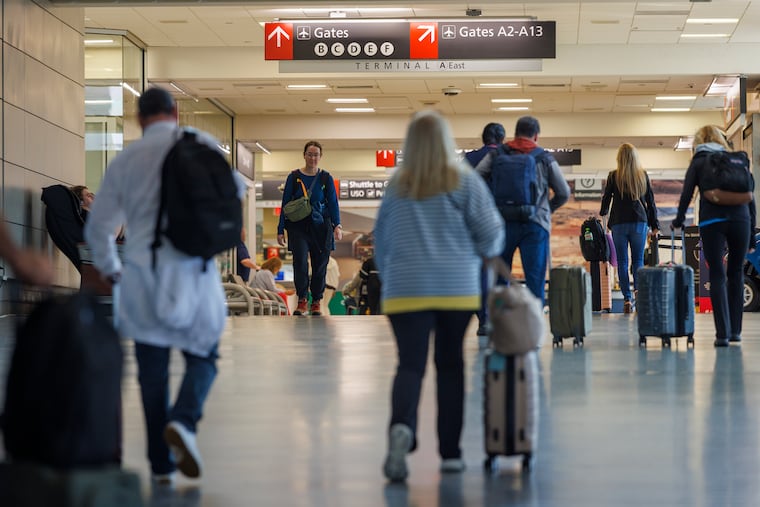
But the airport suffers from small waiting areas for passengers and a lack of natural light, Taylor said.
High ceilings, natural light, and vistas can be found at the airports rated highest by consumers, he said.
Taylor says PHL wasn’t built to serve the number of passengers it does today.
O’Hare International Airport in Chicago, which ranked last among the mega-airport group with at least 33 million passengers annually, has a similar problem, Taylor said: “Too many people flying … to have a building that can accommodate them.”
PHL has been renovating bathrooms, adding lactation rooms, and spending millions on new landscaping, paint, tiles, and carpeting in terminals. At Tuesday’s news conference, Parker and airport leaders discussed how the airport is in the midst of a nearly $2 billion investment to upgrade the airport, which started a few years ago. The airport also appears to be adding square footage.
The Department of Aviation purchased a 441,000-square-foot property near the airport, at 8800 Tinicum Blvd, in July. The airport doesn’t yet have definitive plans for the $42 million building, but it could be used for the department’s headquarters.
PHL chief commercial officer Kate Sullivan said in a city hearing in June that compared to many of its “peer airports,” PHL has “very little room to grow,” given its geographic location.
“PHL is just incredibly land-constrained … we’re hemmed in by highways, by rivers, by towns,” Sullivan said. “Policy-wise, when an adjacent parcel comes available for us to look at, we at least want to have a conversation about it.”
Parker said Tuesday that she is hopeful about and looking forward to a “historic capital investment” that would lay the foundation for Philadelphia’s airport for generations to come.
But she didn’t elaborate on what that will entail, adding: “I won’t go into detail because the lawyers are somewhere going to be saying no, you’re going to go overboard, you’re not allowed to say that.”