These 10 Philly blocks will be the first to get $100,000 upgrades through Mayor Parker’s housing initiative
The services include debris removal, tree trimming, lawn restoration, and sidewalk repairs.
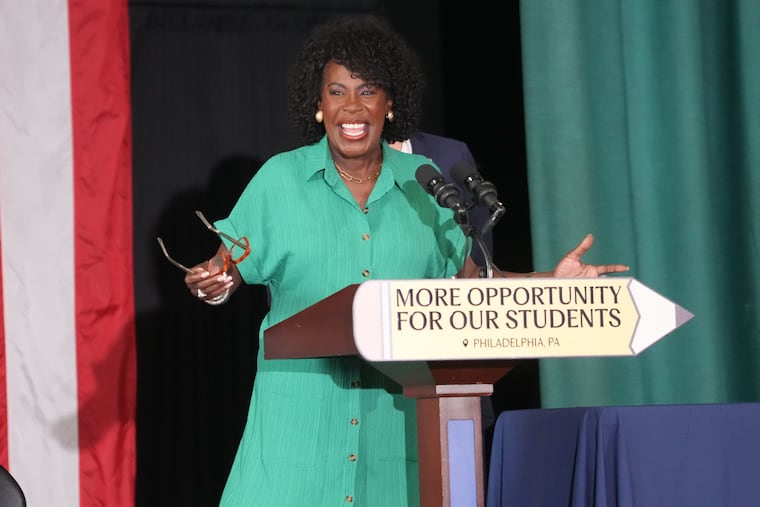
Mayor Cherelle L. Parker’s administration on Wednesday announced the first 10 residential blocks that will each receive $100,000 in beautification upgrades as part of the city’s Curbside Appeal program.
The program is part of Parker’s Housing Opportunities Made Easy, or H.O.M.E., initiative, which seeks to build or preserve 30,000 units of housing in the city.
“Every Philadelphian deserves to live on a block they can be proud of,” Parker said in a statement, adding that the program “gives neighbors the resources to come together, improve their surroundings, and strengthen the sense of community that makes our city special.”
The first 10 blocks set to receive services under the program, including debris removal, tree trimming, lawn restoration, and sidewalk repairs, are:
1300 block of South Ruby Street
1700 block of St. Paul Street
1800 block of Hart Lane
2200 block of South Sixth Street
2500 block of North Marston Street
3000 block of Titan Street
3200 block of North Howard Street
5000 block of Newhall Street
First block of Hobart Street
First block of Wiota Street
In May and June, residents were encouraged to nominate blocks for the program through their Neighborhood Advisory Committees or Neighborhood Community Action Centers, the so-called mini-City Halls Parker has established throughout the city to make services more accessible.
The next round of nominations for the program will take place in the spring.
“By partnering directly with neighbors, we’re helping transform blocks in ways that reflect the priorities of the people who live there while building stronger, more connected communities,” Jessie Lawrence, the city’s director of planning and development, said in a statement.
» READ MORE: Mayor Cherelle Parker’s housing plan is back on track after Council again reapproved $800 million in city bonds
Council approved the H.O.M.E. initiative, which is funded primarily through $800 million in city bonds, in June 2025. Lawmakers then clashed with the administration last fall over income thresholds for some of the housing programs it funds, with Council successfully pushing through changes that prioritize poorer residents.
The city issued the first $400 million in H.O.M.E. bonds earlier this year, and is scheduled to issue the next tranche in 2027.